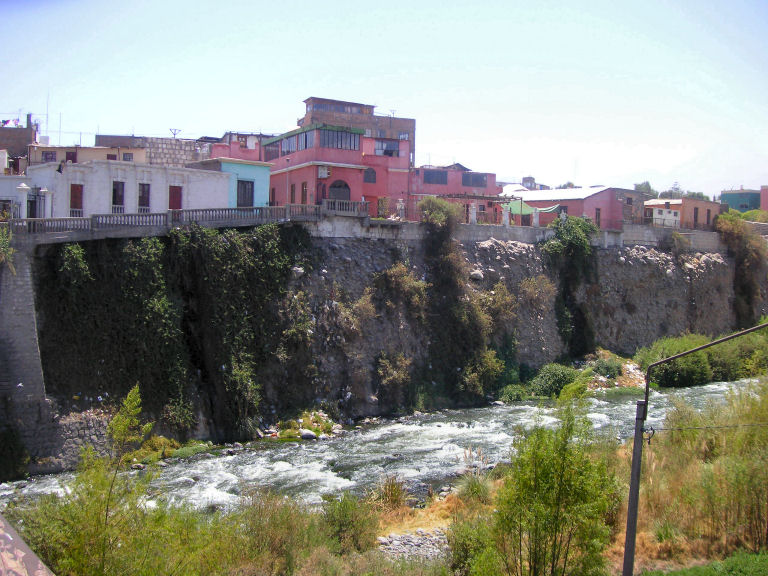
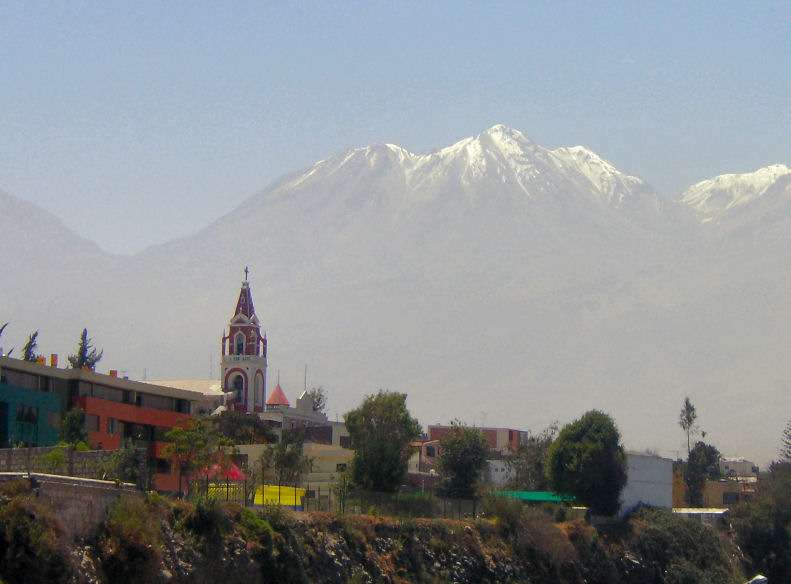
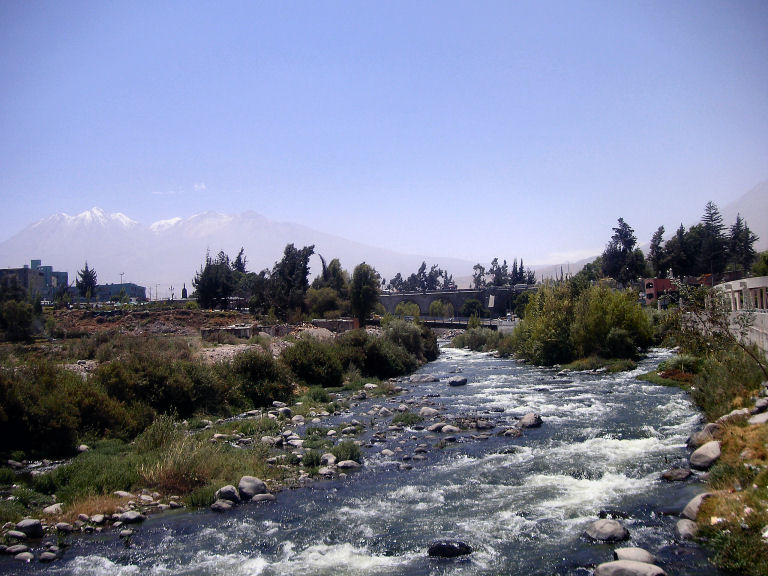
The weekend brought two football matches, one pretty small and one pretty large. But first we had to pay a visit to the Clinica Arequipa where we had an appointment with a paediatrician so that Matthew could have a check-up. Afterwards I walked from the Clinic, located on Puente Grau about 3km from the centre of Arequipa, to the Plaza de Armas so that I could have a look around and take some photos. There are a number of colourful colonial buildings in the La Gruta district, west of the Rio Chili, of the central district of Arequipa area I walked through including the Monasterio de la Recoleta church and there were also very nice views up the Rio Chili towards the Chachani volcano.
At 3pm in the afternoon the first football game of the weekend took place and I attended it with Luz´s father. The game in question was between IDUNSA and Atlético Huracán in the Copa Peru 2008. The Copa Peru is a competition for Peruvian clubs who are outside the top two divisions. The country is split into 8 different geographic regions each containing either 2 or 3
departments. Each of these departments also hold internal competitions various levels (district and provincial) and the top two overall in these departmental competitions go through to the regional competition with the top two of the other departments in that region. Then the top two in each region go through to the national knockout stage. The overall winner of the Copa Peru is promoted into the Peruvian Premier Division whereas the runner-up goes into the Second Division.
Teams from the department of Arequipa compete in Region 7 along with the qualified teams from the departments of Tacna and Moquegua. The six teams play in two groups of 3 with the group winners playing off for the regional championship. IDUNSA, from the city of Arequipa, were the winners of the Arequipa Department (Pierola from Camaná were runners-up and will also take part in the Regional competition) whilst Atlético Huracán, from the city of Moquegua, were the runners-up in the department of Moquegua.
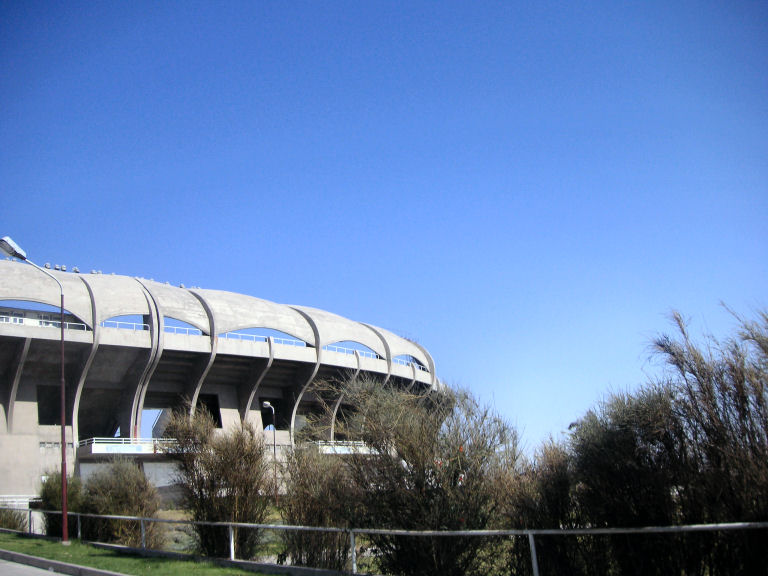
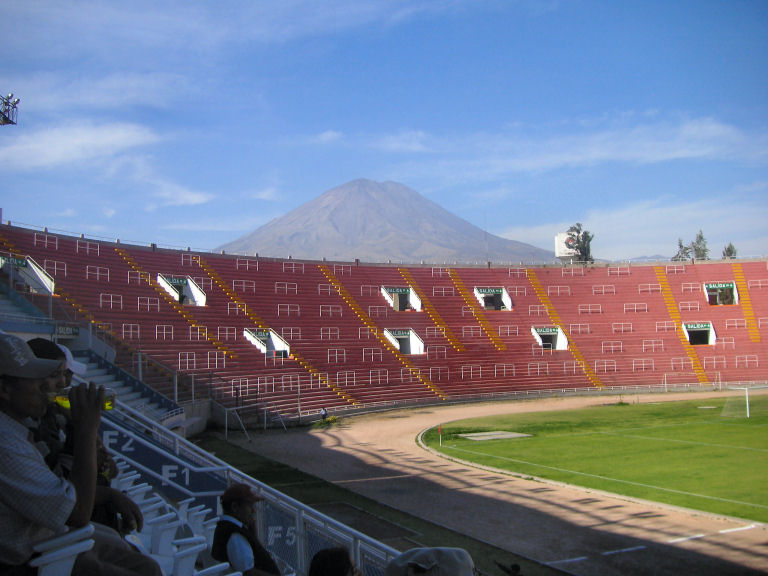
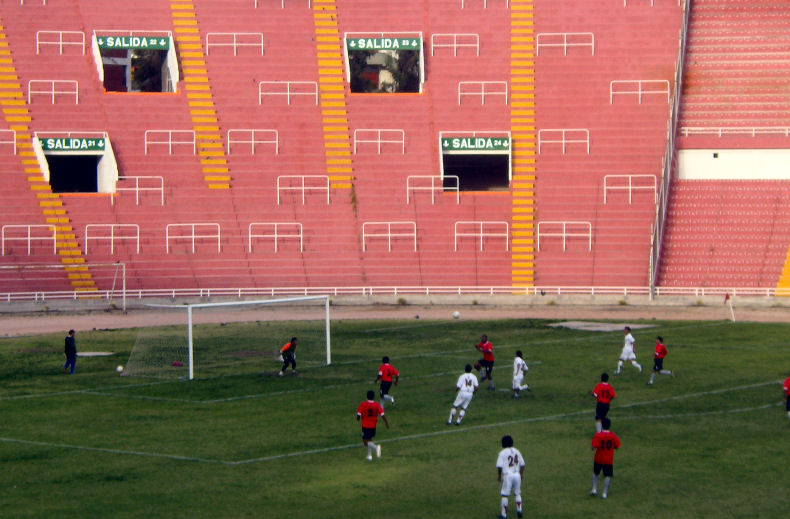
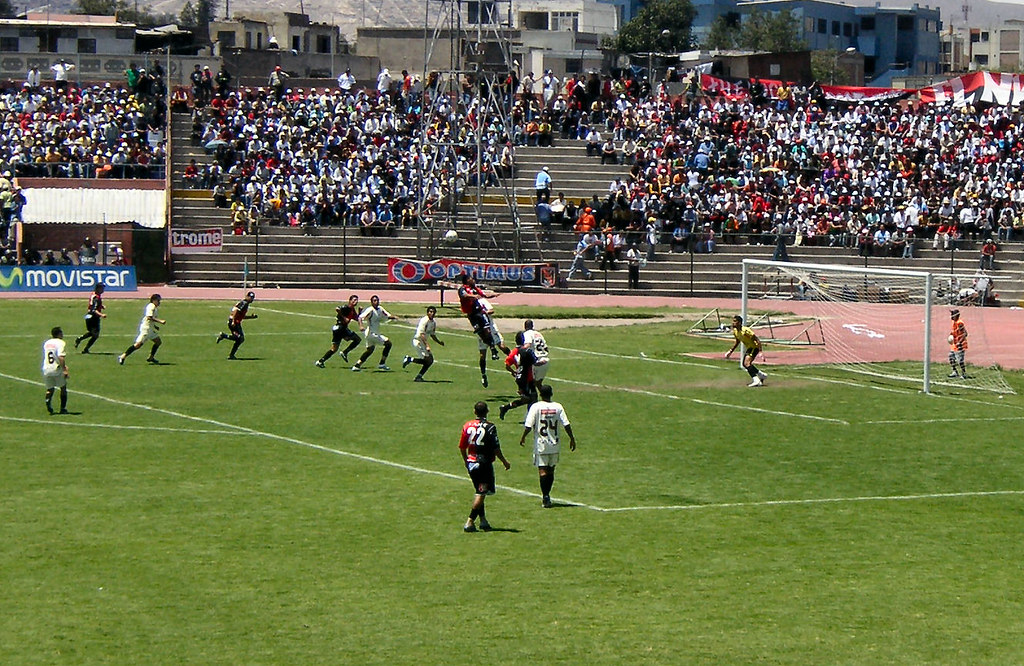
The game was played at the very large UNSA (Universidad Nacional San Augustín) stadium, located in the Miraflores district underneath El Misti volcano, which has a capacity of around 50000 spectators and played host to a number of games in the Copa America 2004 competition which was held in Peru. Today, however, the stadium held only around 500 people and so looked very empty. And the game, played on a poor pitch, was also of pretty low quality with many mistakes and poor passes. IDUNSA did have a couple of good players in numbers 23 and 24, both wingers, who looked a cut above most of the other players and created quite a few chances. IDUNSA managed to win 4-0 in the end but should really have won by a far greater margin as they were a lot better than Atlético Huracán. They look a very good bet to win the overall regional competition and progress through to the national stage.
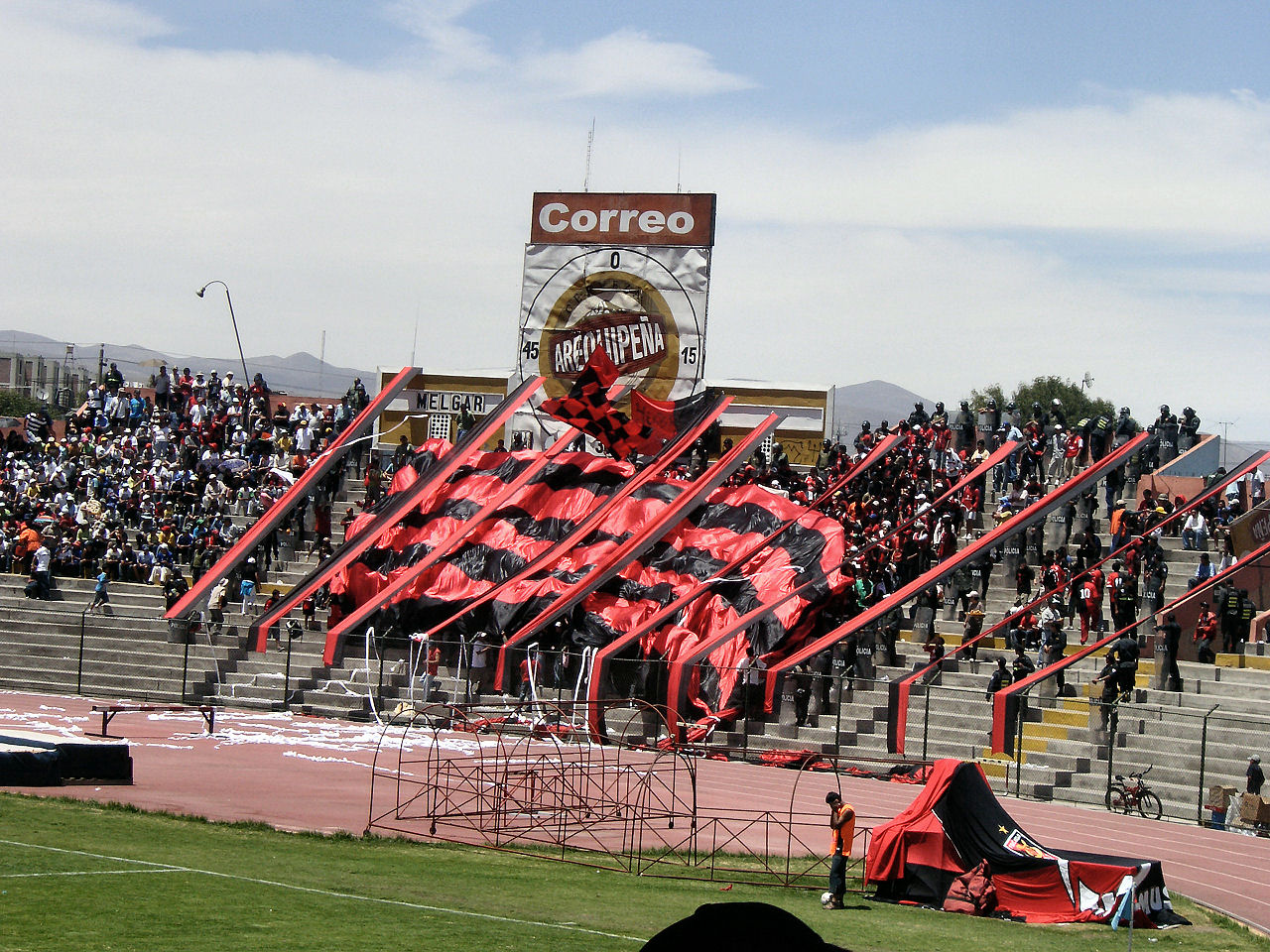
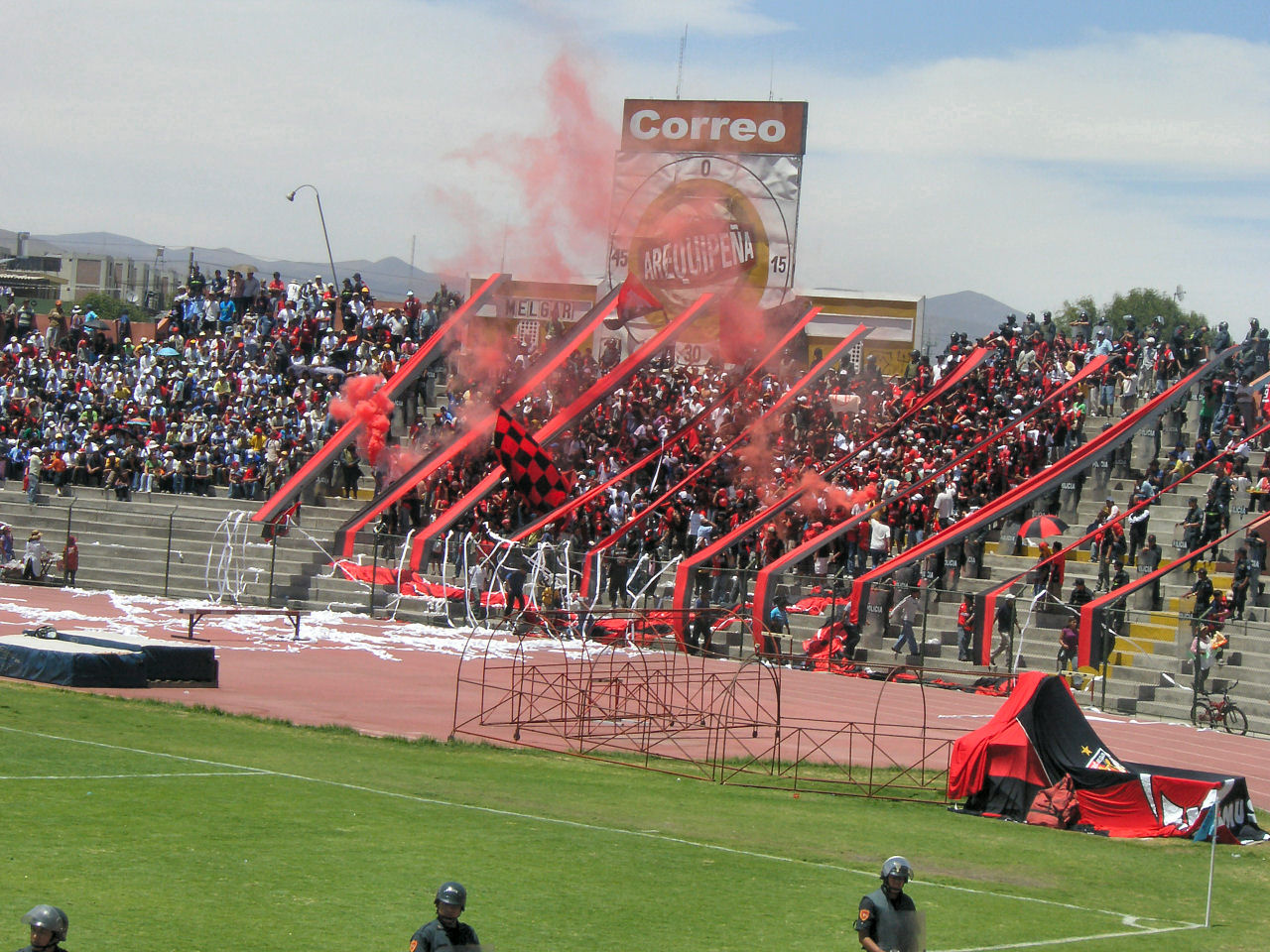
The next day, at 11:30 a much more important game took place and I also attended with Luz´s father. This game was between FBC Melgar v Universitario de Deportes in the Torneo Clausura (Closing Tournament) of the Primera División Peruana. FBC Melgar have long been the best team in Arequipa and won the overall Peruvian championship in 1981, the first time a team outside of Lima had done so. Universitario de Deportes, from Lima, are considered to be one of the "Big Three" of Peruvian football along with Alianza Lima and Sporting Cristal and have won the Peruvian title a record 24 times.
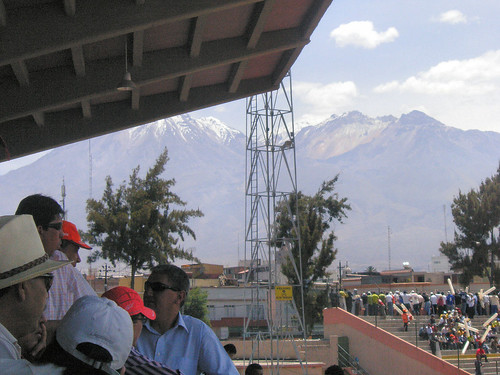
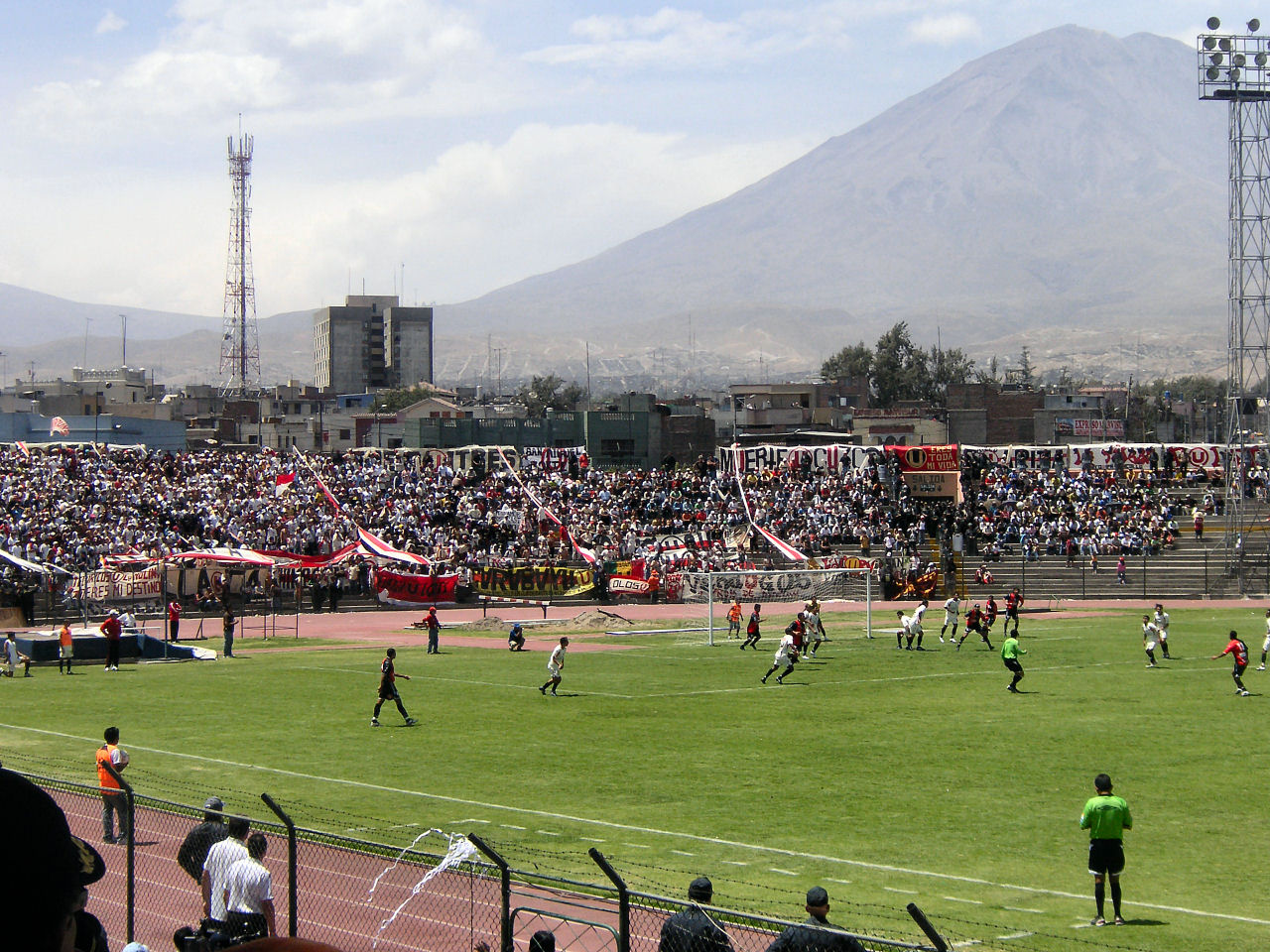
This game was played at FBC Melgar´s home stadium, the 20000 capacity Estadio Mariano Melgar (named after the famous poet from Arequipa) which although quite small at least has a good view of three huge volcanoes (2), something which can´t be said for 99% of football grounds. Although it attracted only around 10000 spectators they created a very good atmosphere with plenty of singing, huge colourful flags, dancing and fireworks. Universitario are a very popular team throughout Peru, not just in Lima, and they had also brought a large number of fans including many from Arequipa.
It was a decent game, probably of high English Championship standard, and overall Universitario were the better team and deservedly won 2-1 with two goals by their Peruvian international striker Roberto Jimenez, both following defensive mistakes by Melgar.
Melgar´s goal came in the last minute from their long-haired Argentinian-born striker Sergio Ibarra.
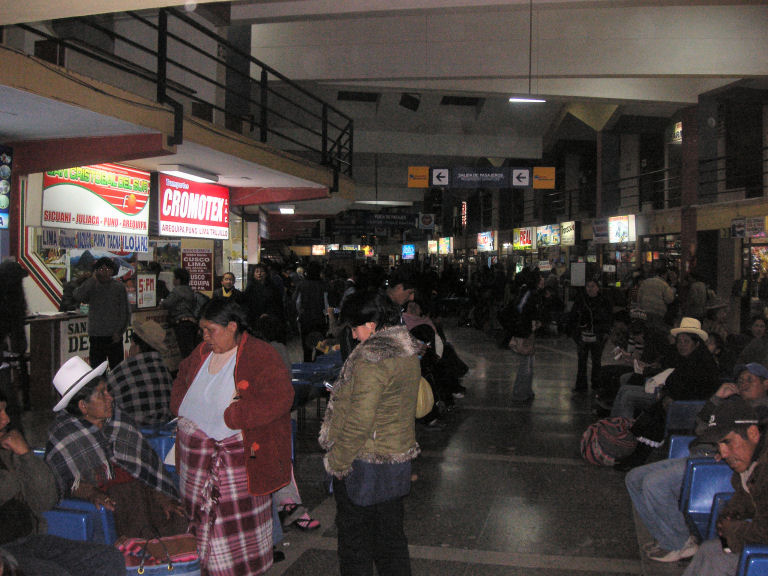
In the evening, at around 7pm, we left for the Terminal Terrestre bus station in order to catch our bus to Cuzco. This time we had booked tickets through the Cruz del Sur bus company whose luxury buses included seats which could be folded right down to make beds. I always find it very difficult to sleep on buses or planes and hopefully this would help. There was also waitress service, a meal, TV and the buses were equipped with various safety measures so all-in-all it should be a comfortable trip.
The bus left at around 8:30pm and made its way up through Yura and the Cordillera Volcánica, passing the Laguna Lagunillas until it reached the town of Juliaca, just west of Lake Titicaca, at around 1am the following morning. The road was very rough for much of the way and also rises to almost 5000m at its highest point. It also became very cold and we were thankful for the blankets which the bus company had provided us with. After a short stop in Juliaca to pick up a few more passengers the bus left and continued its journey through the night to Cuzco.
Oh, and I didn´t really manage to sleep properly on this bus either.
Wednesday, October 8, 2008


Tuesday, October 7, 2008
29th September - Jungle Trip Day One
The rest of the overnight bus journey from Arequipa to Cuzco passed without any noteworthy incidents but it was still pretty bumpy and cold. We reached Cuzco bus station just before 5:30am and it was only barely starting to get light. We then decided to walk the 5km or so to the centre of the city to see if anything was open yet. Our flight to Puerto Maldonado was not until 11:30 so we had 4 hours to kill before making our way to the airport.
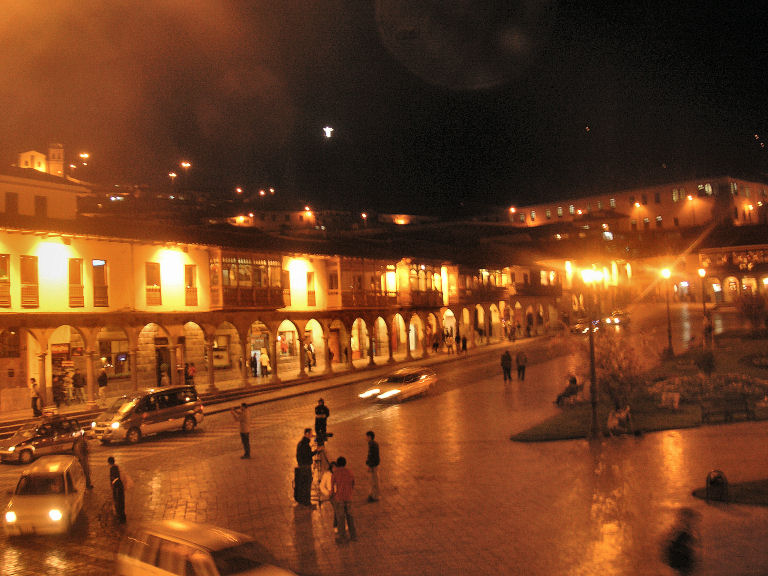
Unfortunately nothing was so we had to sit in the Plaza de Armas for about an hour to wait. There were a few drunken youths still sleeping off the effects of the previous nights drinking dotted around the square as well as a large contingent of local police. After we´d been waiting for some time we decided to ask one of them when the shops or cafes would open and he pointed out a cafe on the northern side of the square which was now open. So we went there for breakfast and found a few other tourists who had had the same idea (although it seemed to be the only place open anyway).
After breakfast more places had now opened and we then paid a visit to the large and very impressive cathedral where a mass was being held followed by a walk up Hatunrumiyoc street, home of the famous 12 sided stone Incorporated into the Inca wall which runs down most of its length. I´m not going to go into too much detail about the various sights of Cuzco as they were covered in the blog of my previous visit in 2006.
We then visited the main market where we tried a delicious fruit juice made up of about 6 different fruits and then spent about half an hour sitting in the Plaza San Francisco to enjoy the warm sun and watch the people milling about there.
However, when it came time to catch a taxi to the airport it was noticeable that pretty heavy clouds were building up on the hills surrounding Cuzco and it seemed that a rain shower was imminent, something that is quite common in Cuzco at that time of the year. By the time we reached the Alejandro Velasco Astete airport some of the clouds in the distance were looking quite black and ominous, not really what we wanted to see when we were due to fly in a few hours!
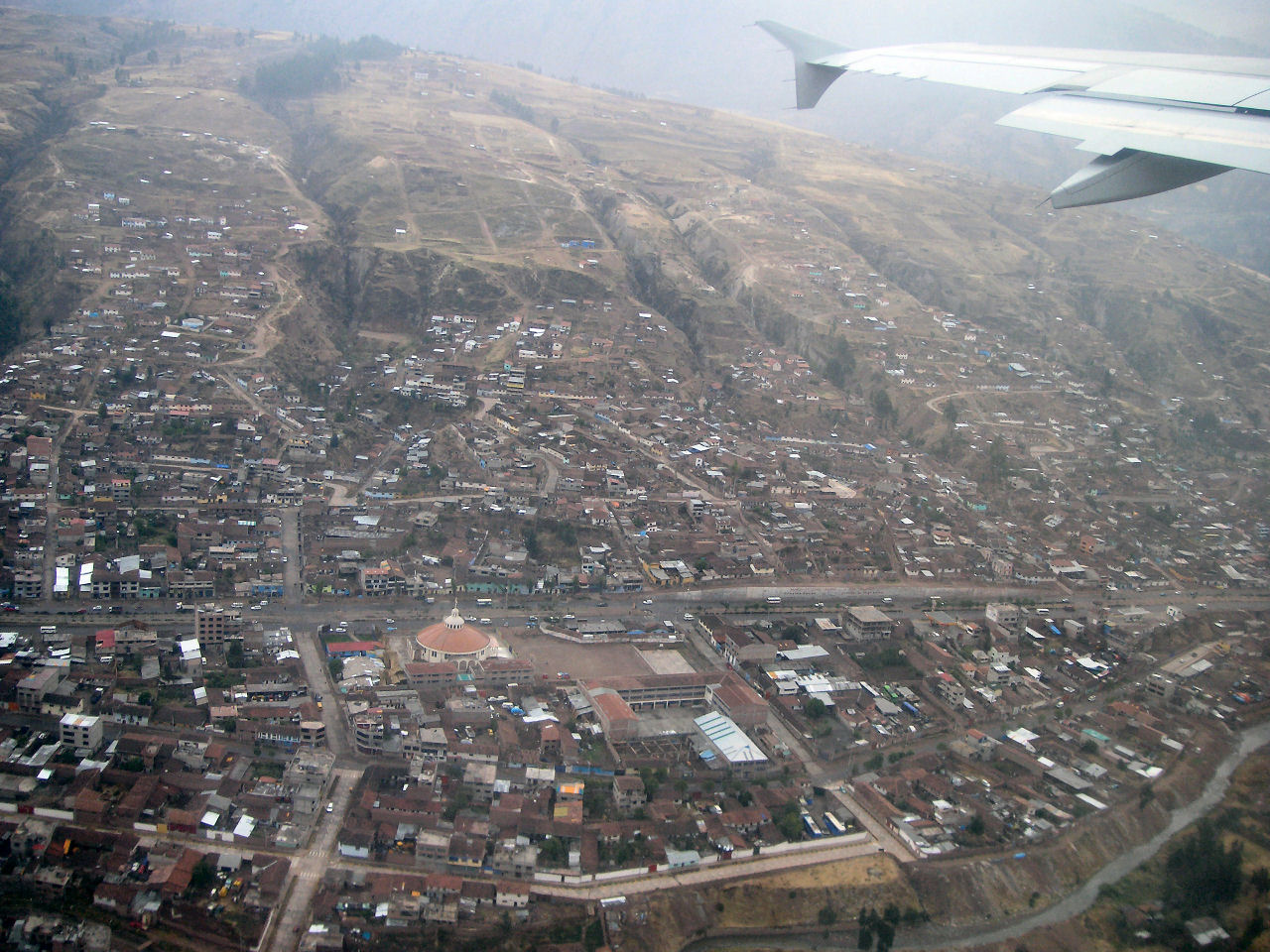
Our flight to Puerto Maldonado actually turned out to be delayed for about 30 minutes due to it arriving late and by the time we took off the weather was a bit overcast but there had been no rain. There were still a lot of clouds around though, which meant it was difficult to see much out of the window and it took quite a while before we rose above the cloud level into clear sky. There was quite a lot of turbulence, some of it pretty rough, during the 30 minute flight but shortly before we were due to land the clouds cleared slightly and it was possible to see that vast expanse of green jungle spread out far and wide below us. The Inambari and Madre de Dios rivers and the road which ran from Cuzco to Puerto Maldonado (a journey which can take many days during the rainy season) were also clearly visible as were numerous fires dotted here and there, presumably for land clearance.
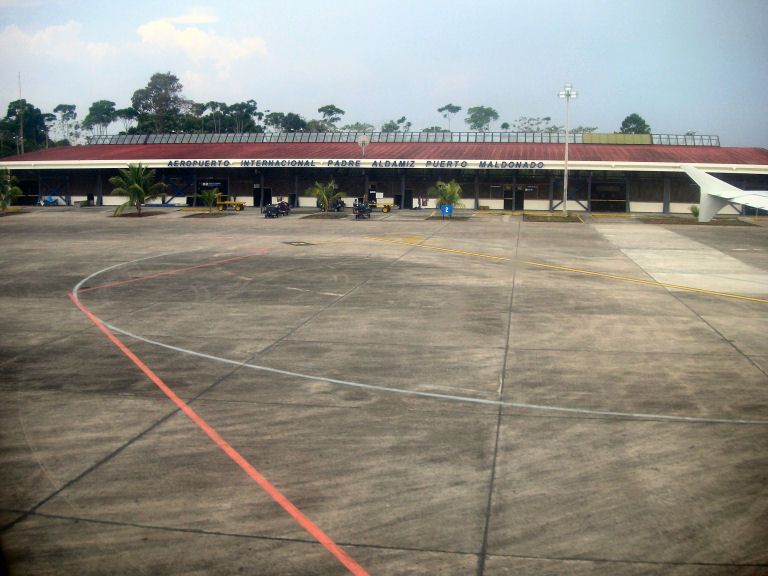
Once we stepped off the plane at Padre Jose Aldamiz International Airport (named after a missionary who did much work with local communities) in Puerto Maldonado it was like stepping into a sauna. It was very hot, 30°C or so, but the air was also very humid (around 80% humidity) and I was soon sweating quite heavy.
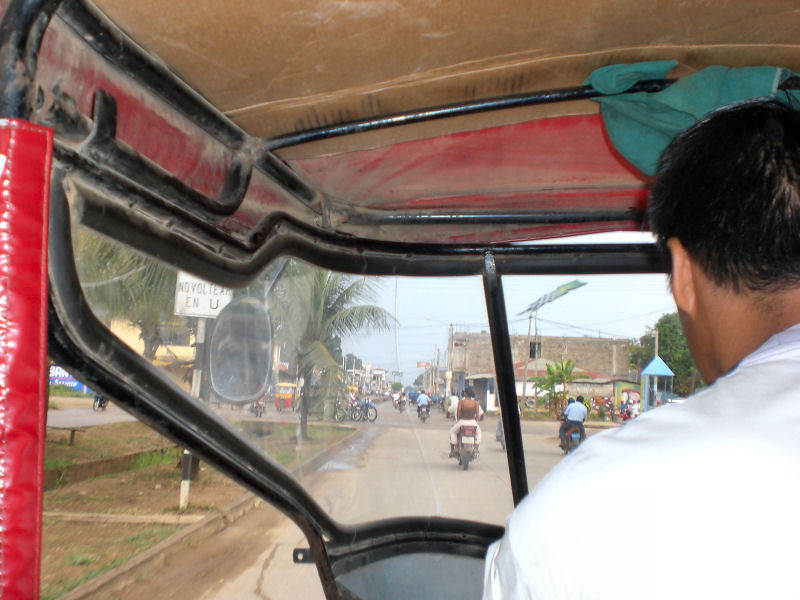
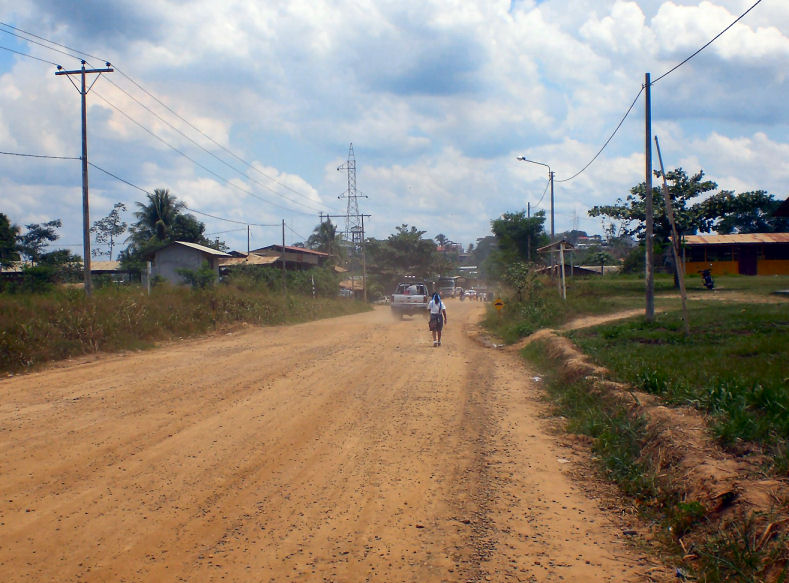
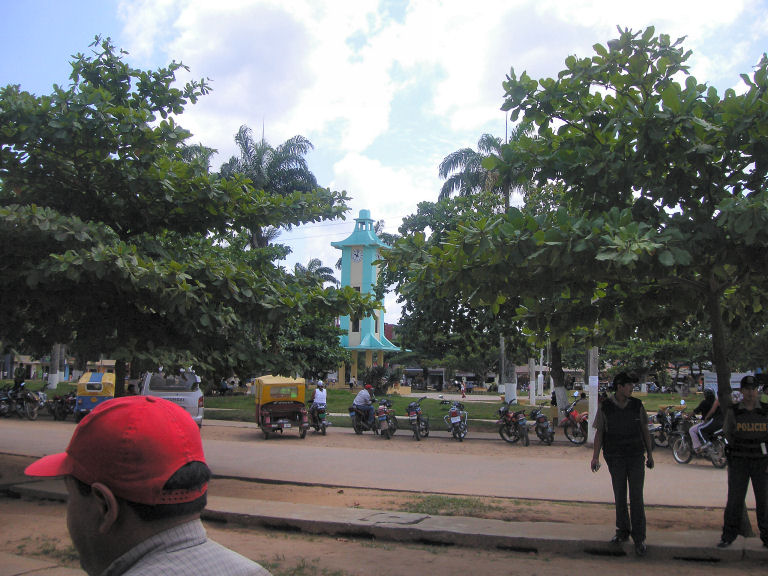
After we had picked up our luggage we choose to make our way into the centre of the city by one of the ubiquitous motor-taxis, something which I´d never used before. The ride to the Plaza de Armas took about 30 minutes, was a lot smoother than I expected and cost us only 3 sols. Private cars are almost non-existent here and instead everyone buzzes around on either the motor-taxis or normal motorcycles.
Once we reached the Plaza de Armas we managed to find a tour agency very close-by and went in to enquire about possible jungle trips. We were told that it was still possible to join a 4 day\3 night trip but that the boat to the lodge would be leaving very shortly and if we missed it we would have to wait until the following day for the next one. But first we had to pay for the trip and there then followed a madcap rush around the various banks dotted around the main square looking for suitable cash machines from which to take the necessary funds. It took us around 10 minutes to do so and we made the boat just in time!
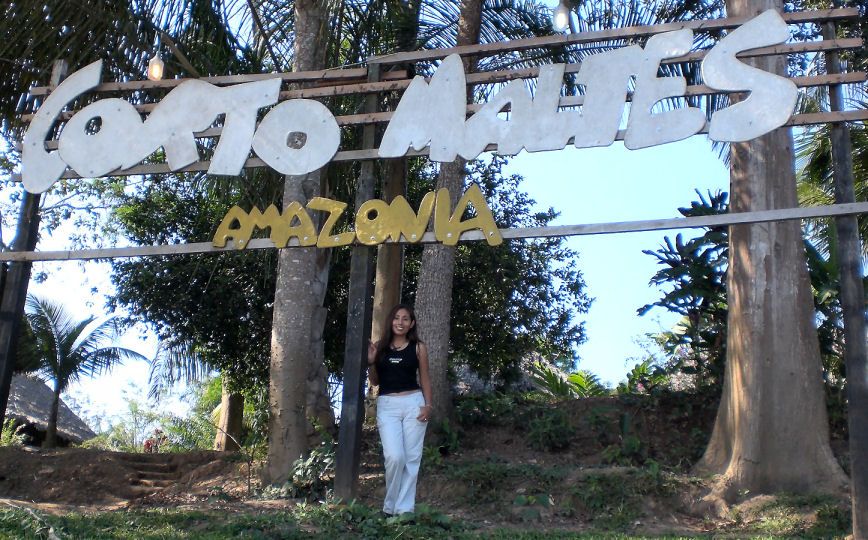
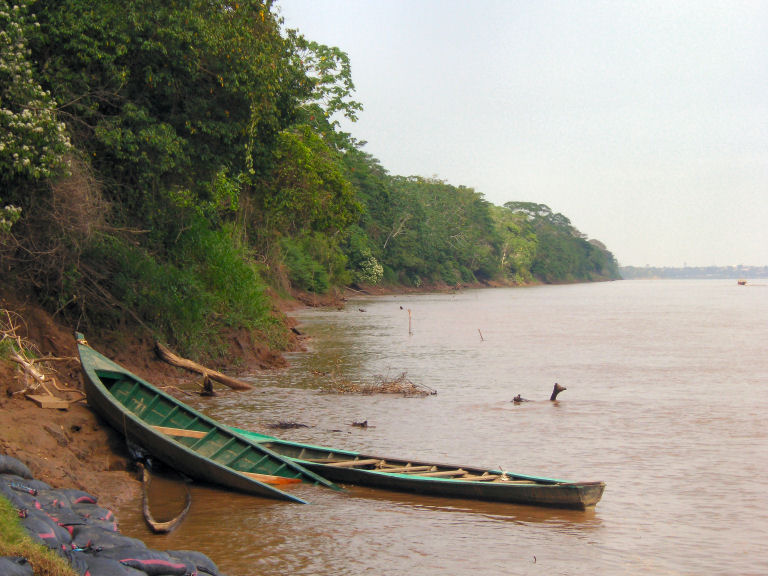
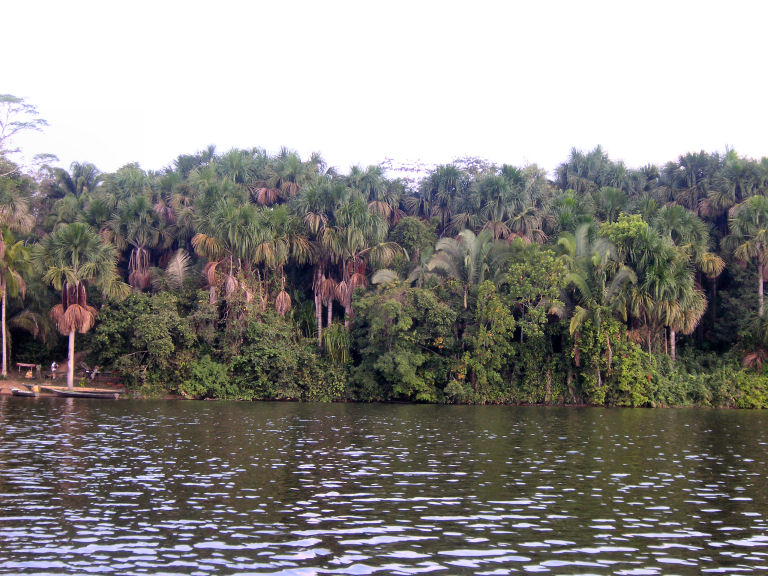
The trip down the Madre de Dios river took around 45 minutes and we passed through jungle-lined river banks before arriving at our home for the next three nights, the Corto Maltes Amazonia lodge, located in an attractive position right by the river.
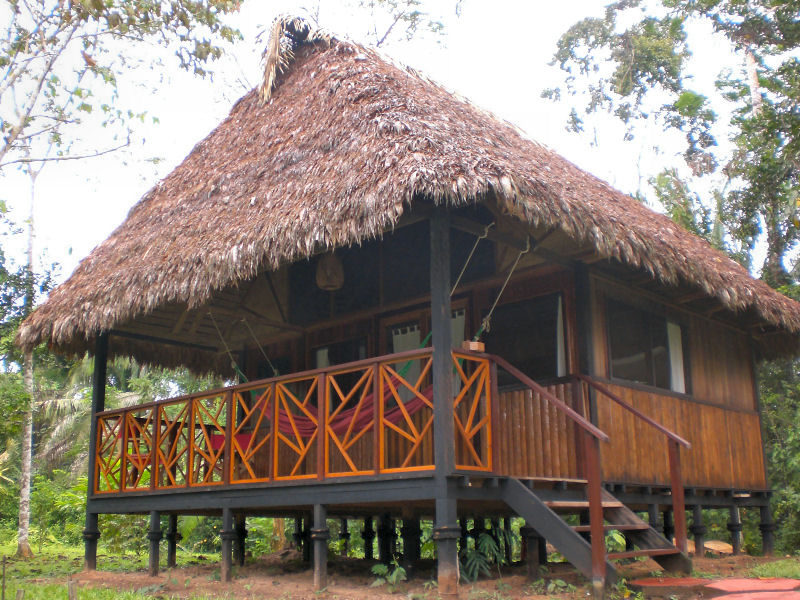
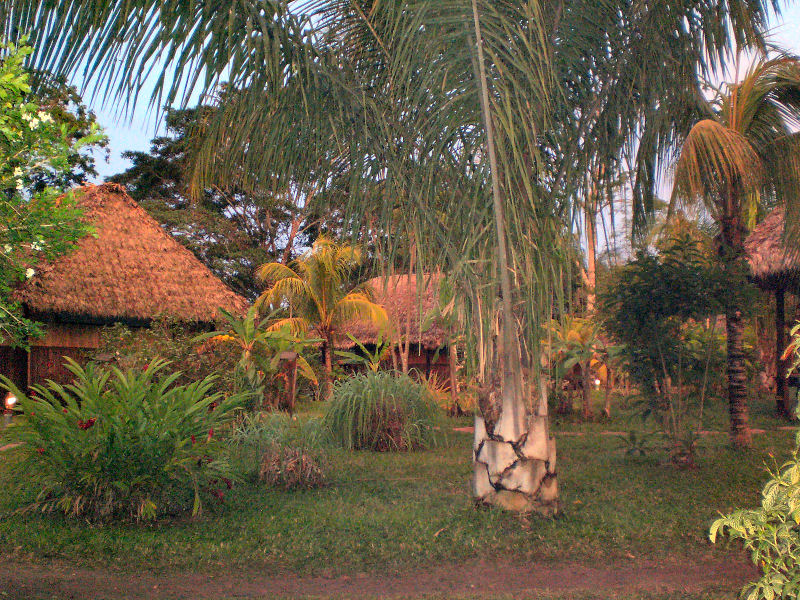
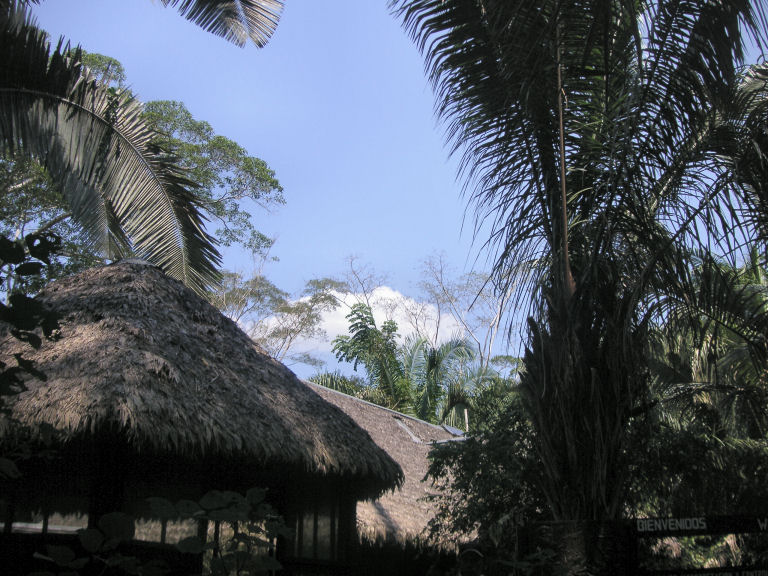
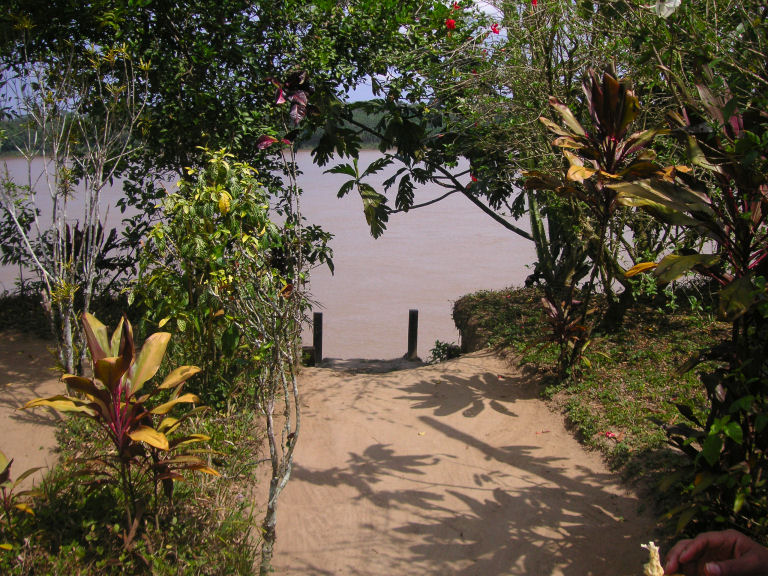
The first thing we did once we had arrived was to enjoy a welcome drink in the bar and listen to the introduction given by one of the guides who worked there. We were then given the key to our hut, based in the very attractive grounds (2) (3) of the lodge. Each hut in the complex was equipped with a front patio containing a small sitting area plus two hammocks. Inside were two beds, one double and one single, with a canopy made up of a mosquito net which could be dropped outside the edge of the bed if required. There was also a small bathroom with a shower. However, the electricity to the huts was not constant and was only available for 3 periods per day, for a few hours each in the morning, afternoon and evening.
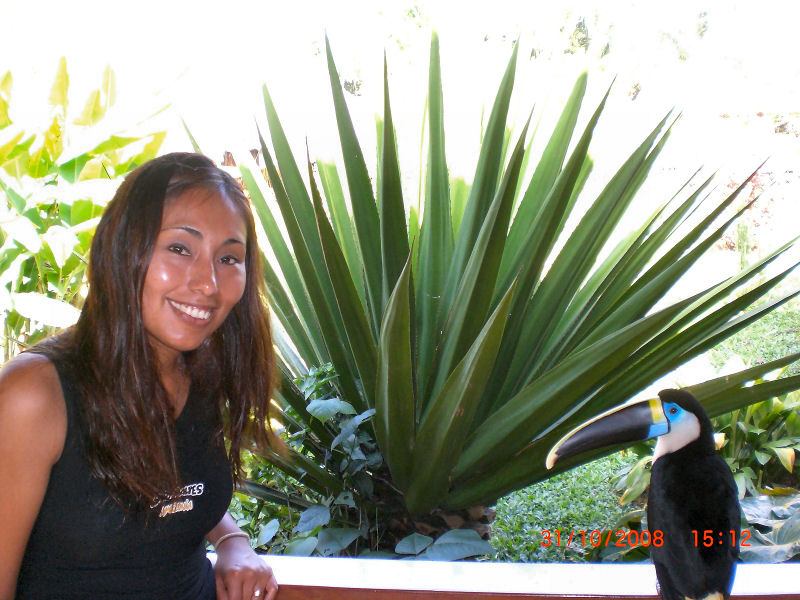
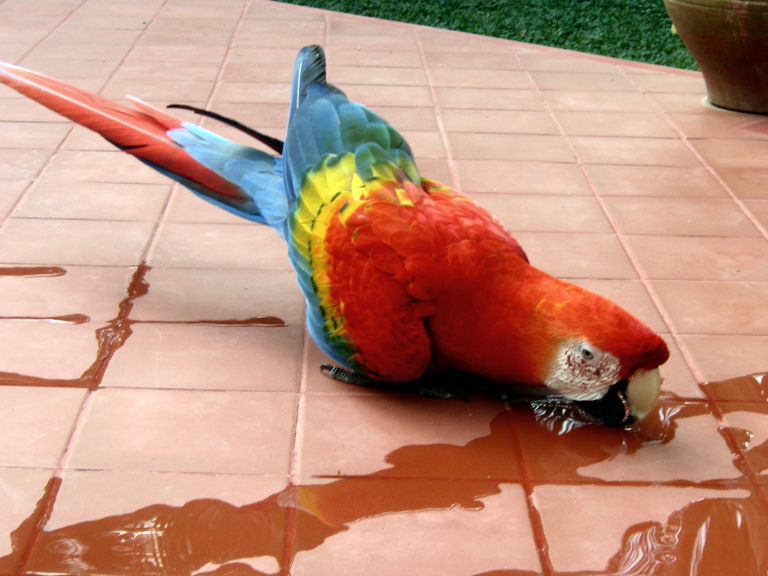
We then went for a short walk around the complex which included a small swimming pool with a bar and was also home to a toucan and two large macaws, one scarlet and the other blue and yellow The main building contained a small shop, selling various locally made souvenirs, a large dining area and a bar with a pool table, games and a selection of books which could be borrowed.
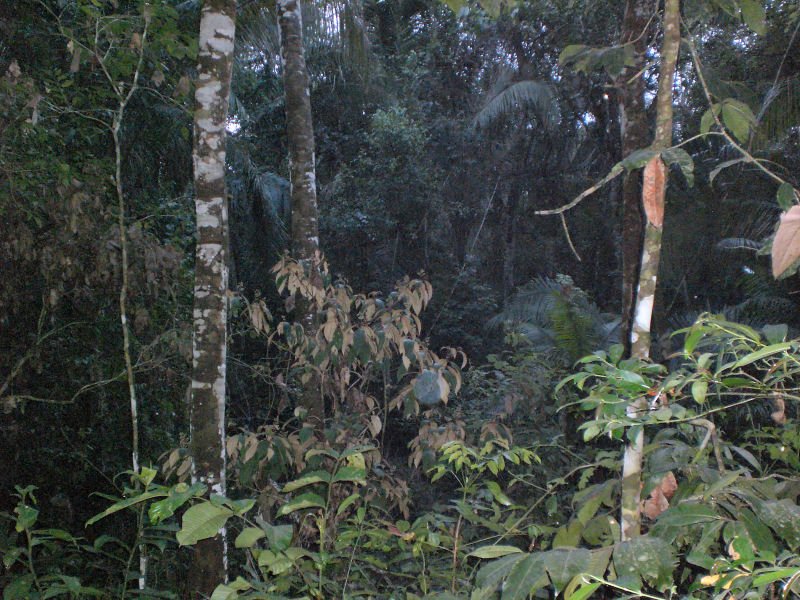
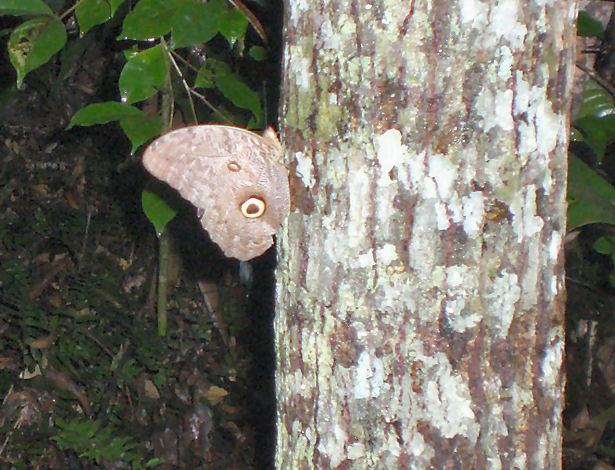
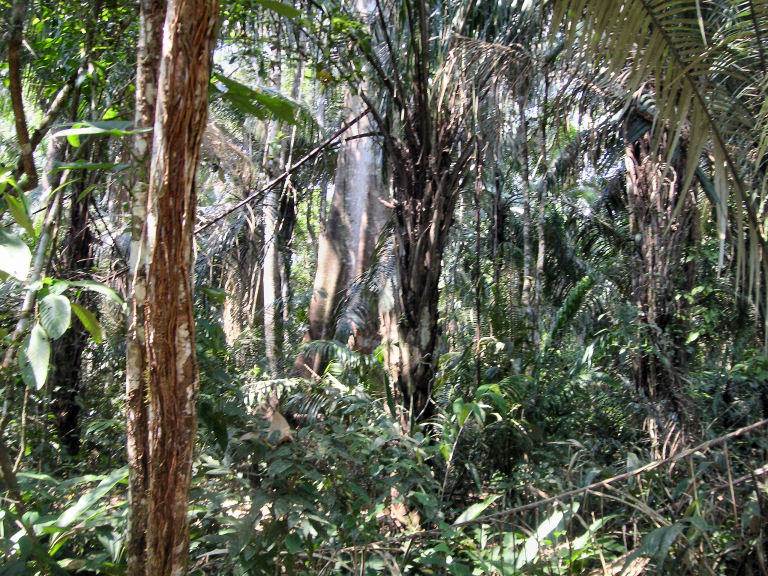
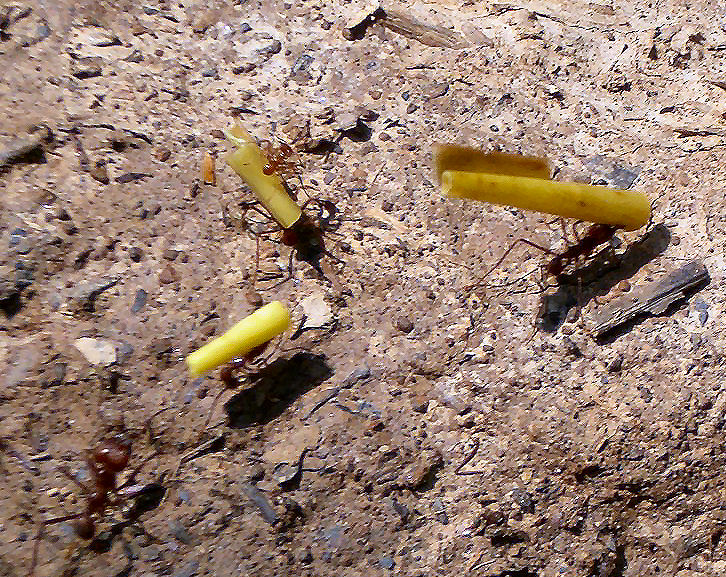
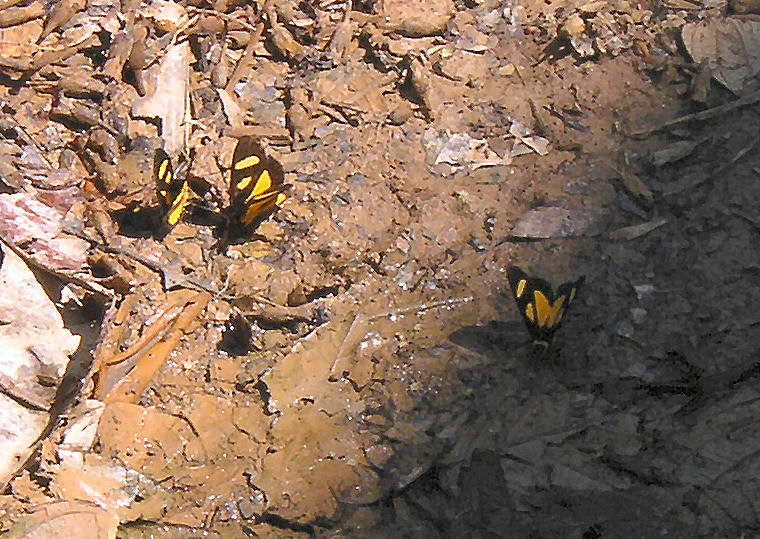
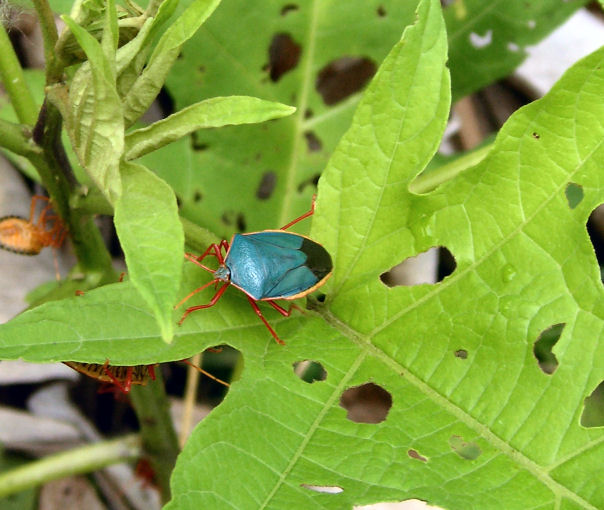
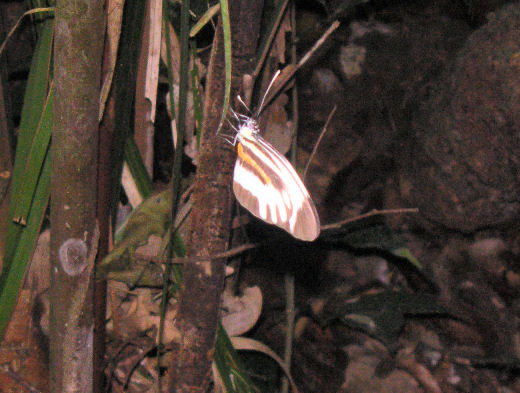
Later in the afternoon we went out on our first excursion of the trip, a visit into the section of jungle directly behind the complex. The 3km walk took around 1.5 hours and our group was quite small, just the two of us along with a 4 Israelis, and our guide seemed a bit unenthusiastic but he did give a reasonable explanation about the various trees and plants that we saw. These included wild papayas, passion fruit, lemons, bananas, guave and cocoa trees, the garlic and uña de gato (Catsclaw or Acacia greggii, commonly used in Peru for its medicinal properties) plants as well as the huge Kapok tree with its cotton-like seed pods. We didn´t see too much wildlife however, apart from huge wasps nests up in the trees, a brief glimpse of some wild turkeys flying overhead, lots of different types of butterflies (including the Owl Butterfly with its large "eyes" on its wings) and long trails of ants carrying bits of leafs back to their nest. Creatures like that we heard, but didn´t see, included various frogs and insects such as the cicada which produced some very weird and wonderful sounds and made the jungle a very noisy place.
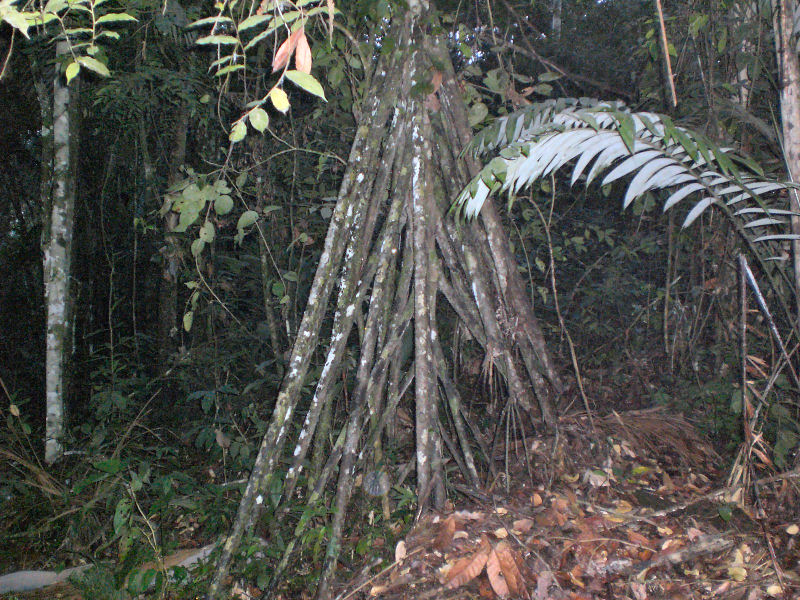
Other trees we saw were the Walking Palm (Socratea exorrhiza) which, due to its long stilt-like roots, can move up to 1 metre per year looking for sunlight. Then there was the Strangler Fig, which grows around the outside of trees and slowly strangles the life of it it until the original tree dies and the Fig takes its place, and the Ironwood Tree (Minquartia guianensis) which produces an extremely hard, strong wood which is used for many different purposes.
In the evening, at 7pm, it was fully dark and the noisy jungle cacophony was in full swing now that the nocturnal creatures had awoken. One of these nocturnal creatures was the Spectacled Caiman (so named because of the bony ridges around its eyes which resembles a pair of glasses) and we were now going on a night-time boat trip in order to try and find some of them.
Just down the river from the lodge were some river cliffs which were home to many of this species. The boat we were travelling in was equipped with a large spot-light to help spot the caiman, or any other nocturnal animals that may be around.
This time we were in a much larger group, along with a number of travellers from France and Canada who were with their French-speaking guide (actually a guy from Arequipa who was a lot more enthusiastic and informative than the guide we had).
The first creature we noticed in the boat´s spotlight were Greater Fishing Bats (also known as the Greater Bulldog Bat due to the appearance of its face), large ghostly flapping things that swooped low over the river looking for a meal.
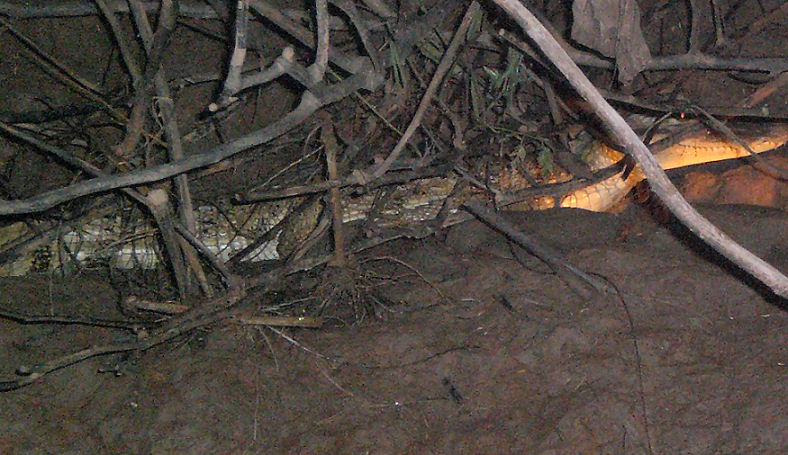
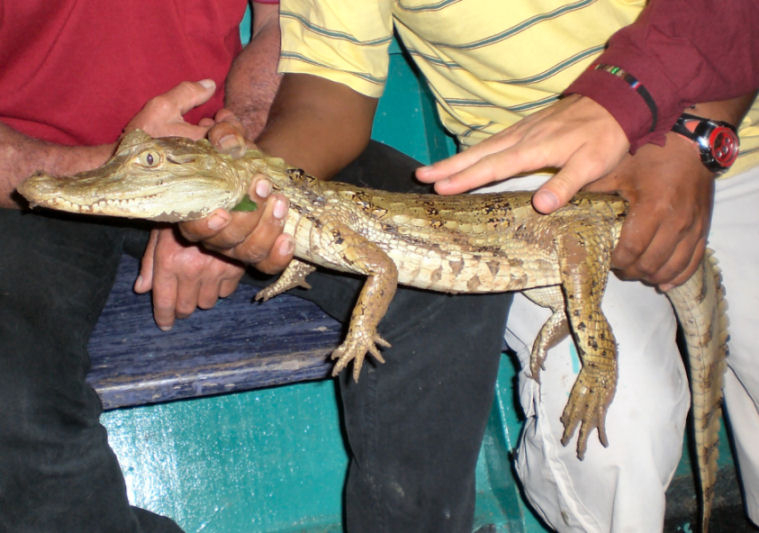
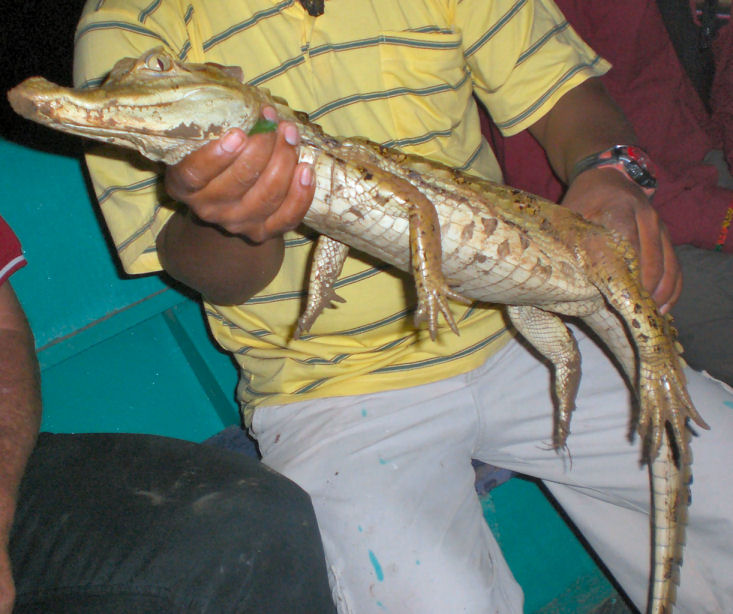
Once we reached the river cliffs it was also possible to see various pairs of Caiman eyes, glowing red in the spotlight, either just sticking out of the water or up on the cliffs or river bank. In a bunch of tree branches we spotted one individual perched very still and we were able to get in very close for a good look. Shortly afterwards we saw another one up on the cliff and after boat landing on the bank one of the guides was able to climb out and catch it. Caimans, like many reptiles, are able to go into a sort of catatonic state when approached very possible predators where they appear to be dead. In this way the guide was able to just pick it up and carry it back to the boat where we were able to have a very good look (2) at it and even touch it without any danger at all, a very special moment. After he had released it back into the wild again it woke up after only a minute or so and was off into the water never to be seen again!
The evening meal afterwards brought more caiman, this time in the form of steaks in a papaya sauce. Very tasty! Then, after a long, tiring day we retired to our hut to sleep. Dotted along the paths within the lodge were small oil lamps, used to light the way and there was also one of the lamps in the front porch of every hut which was a pleasant touch.
I attempted to sleep outside in the hut but had the porch light on in order to read. However, it attracted so many insects, of various shapes and sizes, that I was under almost constant attack. Turning off the light improved things somewhat but I still found it quite difficult to get to sleep, despite the hammock being extremely comfortable, and soon decided to go back inside the hut where a peaceful nights sleep ensued.
Unfortunately nothing was so we had to sit in the Plaza de Armas for about an hour to wait. There were a few drunken youths still sleeping off the effects of the previous nights drinking dotted around the square as well as a large contingent of local police. After we´d been waiting for some time we decided to ask one of them when the shops or cafes would open and he pointed out a cafe on the northern side of the square which was now open. So we went there for breakfast and found a few other tourists who had had the same idea (although it seemed to be the only place open anyway).
After breakfast more places had now opened and we then paid a visit to the large and very impressive cathedral where a mass was being held followed by a walk up Hatunrumiyoc street, home of the famous 12 sided stone Incorporated into the Inca wall which runs down most of its length. I´m not going to go into too much detail about the various sights of Cuzco as they were covered in the blog of my previous visit in 2006.
We then visited the main market where we tried a delicious fruit juice made up of about 6 different fruits and then spent about half an hour sitting in the Plaza San Francisco to enjoy the warm sun and watch the people milling about there.
However, when it came time to catch a taxi to the airport it was noticeable that pretty heavy clouds were building up on the hills surrounding Cuzco and it seemed that a rain shower was imminent, something that is quite common in Cuzco at that time of the year. By the time we reached the Alejandro Velasco Astete airport some of the clouds in the distance were looking quite black and ominous, not really what we wanted to see when we were due to fly in a few hours!
Our flight to Puerto Maldonado actually turned out to be delayed for about 30 minutes due to it arriving late and by the time we took off the weather was a bit overcast but there had been no rain. There were still a lot of clouds around though, which meant it was difficult to see much out of the window and it took quite a while before we rose above the cloud level into clear sky. There was quite a lot of turbulence, some of it pretty rough, during the 30 minute flight but shortly before we were due to land the clouds cleared slightly and it was possible to see that vast expanse of green jungle spread out far and wide below us. The Inambari and Madre de Dios rivers and the road which ran from Cuzco to Puerto Maldonado (a journey which can take many days during the rainy season) were also clearly visible as were numerous fires dotted here and there, presumably for land clearance.
Once we stepped off the plane at Padre Jose Aldamiz International Airport (named after a missionary who did much work with local communities) in Puerto Maldonado it was like stepping into a sauna. It was very hot, 30°C or so, but the air was also very humid (around 80% humidity) and I was soon sweating quite heavy.
After we had picked up our luggage we choose to make our way into the centre of the city by one of the ubiquitous motor-taxis, something which I´d never used before. The ride to the Plaza de Armas took about 30 minutes, was a lot smoother than I expected and cost us only 3 sols. Private cars are almost non-existent here and instead everyone buzzes around on either the motor-taxis or normal motorcycles.
Once we reached the Plaza de Armas we managed to find a tour agency very close-by and went in to enquire about possible jungle trips. We were told that it was still possible to join a 4 day\3 night trip but that the boat to the lodge would be leaving very shortly and if we missed it we would have to wait until the following day for the next one. But first we had to pay for the trip and there then followed a madcap rush around the various banks dotted around the main square looking for suitable cash machines from which to take the necessary funds. It took us around 10 minutes to do so and we made the boat just in time!
The trip down the Madre de Dios river took around 45 minutes and we passed through jungle-lined river banks before arriving at our home for the next three nights, the Corto Maltes Amazonia lodge, located in an attractive position right by the river.
The first thing we did once we had arrived was to enjoy a welcome drink in the bar and listen to the introduction given by one of the guides who worked there. We were then given the key to our hut, based in the very attractive grounds (2) (3) of the lodge. Each hut in the complex was equipped with a front patio containing a small sitting area plus two hammocks. Inside were two beds, one double and one single, with a canopy made up of a mosquito net which could be dropped outside the edge of the bed if required. There was also a small bathroom with a shower. However, the electricity to the huts was not constant and was only available for 3 periods per day, for a few hours each in the morning, afternoon and evening.
We then went for a short walk around the complex which included a small swimming pool with a bar and was also home to a toucan and two large macaws, one scarlet and the other blue and yellow The main building contained a small shop, selling various locally made souvenirs, a large dining area and a bar with a pool table, games and a selection of books which could be borrowed.
Later in the afternoon we went out on our first excursion of the trip, a visit into the section of jungle directly behind the complex. The 3km walk took around 1.5 hours and our group was quite small, just the two of us along with a 4 Israelis, and our guide seemed a bit unenthusiastic but he did give a reasonable explanation about the various trees and plants that we saw. These included wild papayas, passion fruit, lemons, bananas, guave and cocoa trees, the garlic and uña de gato (Catsclaw or Acacia greggii, commonly used in Peru for its medicinal properties) plants as well as the huge Kapok tree with its cotton-like seed pods. We didn´t see too much wildlife however, apart from huge wasps nests up in the trees, a brief glimpse of some wild turkeys flying overhead, lots of different types of butterflies (including the Owl Butterfly with its large "eyes" on its wings) and long trails of ants carrying bits of leafs back to their nest. Creatures like that we heard, but didn´t see, included various frogs and insects such as the cicada which produced some very weird and wonderful sounds and made the jungle a very noisy place.
Other trees we saw were the Walking Palm (Socratea exorrhiza) which, due to its long stilt-like roots, can move up to 1 metre per year looking for sunlight. Then there was the Strangler Fig, which grows around the outside of trees and slowly strangles the life of it it until the original tree dies and the Fig takes its place, and the Ironwood Tree (Minquartia guianensis) which produces an extremely hard, strong wood which is used for many different purposes.
In the evening, at 7pm, it was fully dark and the noisy jungle cacophony was in full swing now that the nocturnal creatures had awoken. One of these nocturnal creatures was the Spectacled Caiman (so named because of the bony ridges around its eyes which resembles a pair of glasses) and we were now going on a night-time boat trip in order to try and find some of them.
Just down the river from the lodge were some river cliffs which were home to many of this species. The boat we were travelling in was equipped with a large spot-light to help spot the caiman, or any other nocturnal animals that may be around.
This time we were in a much larger group, along with a number of travellers from France and Canada who were with their French-speaking guide (actually a guy from Arequipa who was a lot more enthusiastic and informative than the guide we had).
The first creature we noticed in the boat´s spotlight were Greater Fishing Bats (also known as the Greater Bulldog Bat due to the appearance of its face), large ghostly flapping things that swooped low over the river looking for a meal.
Once we reached the river cliffs it was also possible to see various pairs of Caiman eyes, glowing red in the spotlight, either just sticking out of the water or up on the cliffs or river bank. In a bunch of tree branches we spotted one individual perched very still and we were able to get in very close for a good look. Shortly afterwards we saw another one up on the cliff and after boat landing on the bank one of the guides was able to climb out and catch it. Caimans, like many reptiles, are able to go into a sort of catatonic state when approached very possible predators where they appear to be dead. In this way the guide was able to just pick it up and carry it back to the boat where we were able to have a very good look (2) at it and even touch it without any danger at all, a very special moment. After he had released it back into the wild again it woke up after only a minute or so and was off into the water never to be seen again!
The evening meal afterwards brought more caiman, this time in the form of steaks in a papaya sauce. Very tasty! Then, after a long, tiring day we retired to our hut to sleep. Dotted along the paths within the lodge were small oil lamps, used to light the way and there was also one of the lamps in the front porch of every hut which was a pleasant touch.
I attempted to sleep outside in the hut but had the porch light on in order to read. However, it attracted so many insects, of various shapes and sizes, that I was under almost constant attack. Turning off the light improved things somewhat but I still found it quite difficult to get to sleep, despite the hammock being extremely comfortable, and soon decided to go back inside the hut where a peaceful nights sleep ensued.
Monday, October 6, 2008
30th September - Jungle Trip Day Two
On our first morning in the jungle we were up very early, at 5am, for a trip into the jungle behind the lodge to visit the nearby parrot clay lick (or collpas as they are commonly known as in Peru, from the Quechua word for "salty earth"). The lick was situated on a high clay bank on the bend of a small river that ran through the jungle and joined the main Madre de Dios river a short distance upstream of the lodge. At the lick a small hide has been built so that visitors can observe the goings-on without disturbing the parrots.
For the first 30 minutes not much happened apart from the parrots occasionally making a fly past. Apparently they always check out the area to ensure that it is safe. Once this had been established they became more adventurous and began first to perch on the branches which were overhanging the cliff and gradually, one-by-one, making their way down onto the actual cliff-face where they began to nibble at the clay. There are two main theories as to why the parrots (and many other animals) congregate at such sites to eat clay. The first one is that they clay contains nutritive minerals that are good for the parrot and the second is that they clay helps to protect them from any toxins that may be in their diet, from seeds or fruit that may be poisonous.
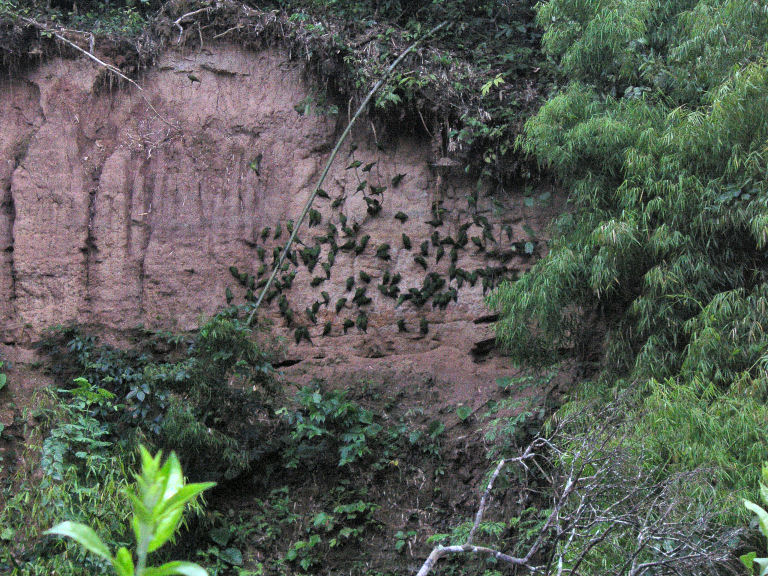
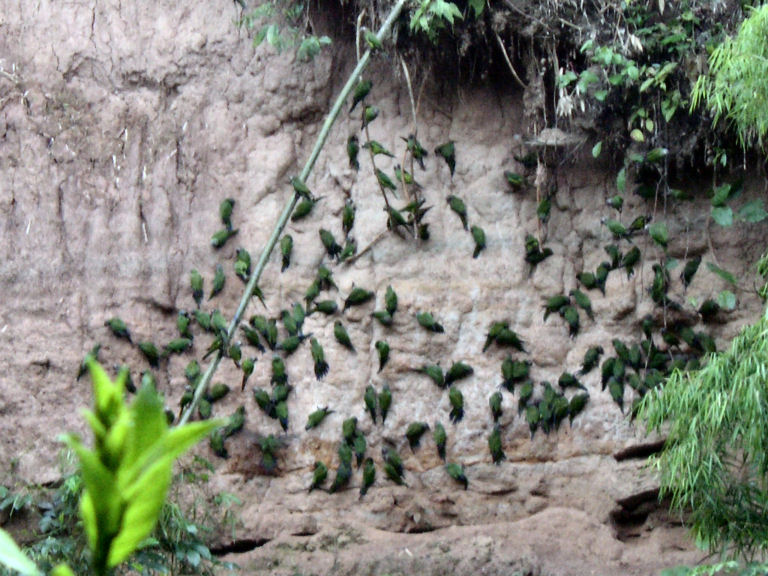
There are five parrots that are commonly seen at this particular lick but this morning we saw only two of them the Dusky-headed Conure (or Parakeet) and the Orange-cheeked Parrot, both so-called for obvious reasons. And they were soon covering the cliff in large numbers (2). After another half an hour they had had enough and disappeared back into the jungle.
The morning´s breakfast brought us a tropical fruit salad and scrambled turtles eggs which tasted only slightly different to the usual chicken eggs and maybe slightly more creamy in textile.
The next excursion took us first to Isla Rolin, more commonly known as "Monkey Island" due to it being used as a refuge for rescued pet monkeys who are then trained to live back in the wild once more. Unfortunately the island is quite large and almost totally covered with thick jungle and, despite calling for them and visiting a few different locations, no monkeys at all were spotted during our visit.
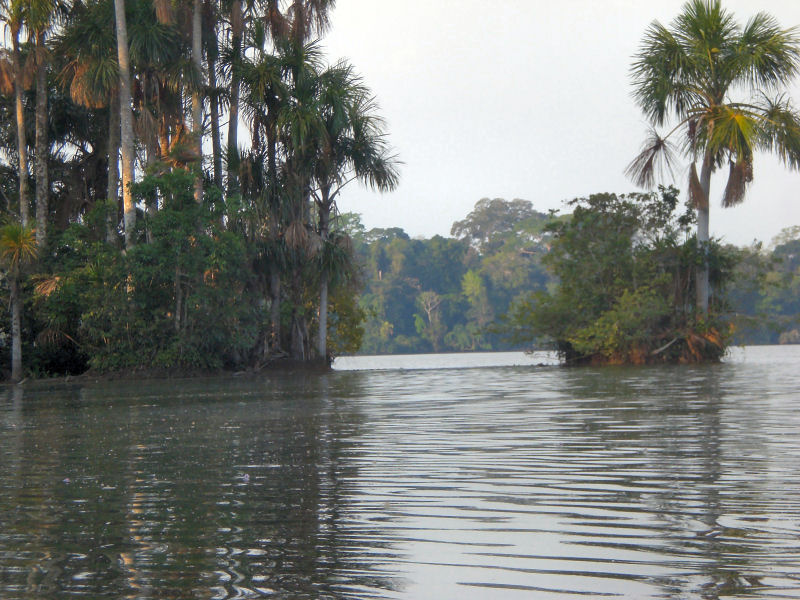
Next on our itinerary was Lago Sandoval, an oxbow lake formed many, many years ago when a meander in the Madre de Dios river became so tight that the river broke through the narrow body of land between its bend and left behind this large u-shaped lake.
Whilst travelling back down river to reach the entrance point for the lake we passed several large floating dredging platforms which are used to try and extract gold from the river silt. It often takes many days of washing many tons of silt to obtain only a few grams of tiny gold grains and the miners live in very poor conditions. Also, mercury is used to finally extract the gold from the silt and this can cause many problems with the health of both the miners and the surrounding environment and the creatures that live there. Gold mining has long been one of the largest industries in the Madre de Dios region and it is thought that much of the gold used by the Incas came from here which was at once part of the Antisuyo region of the Inca Empire.
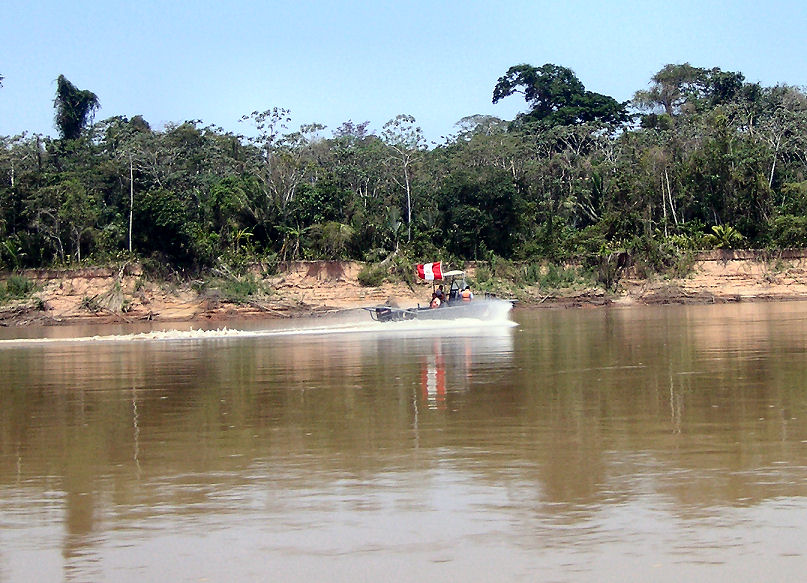
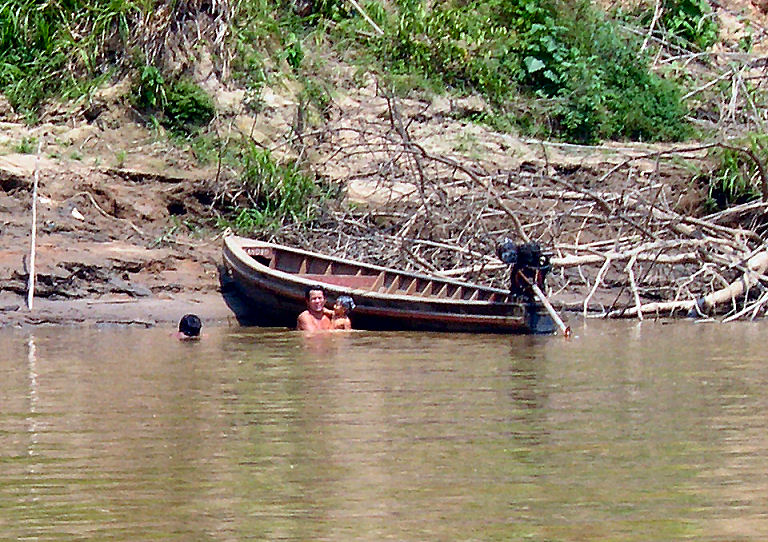
A Peruvian River Police boat also sped past us on its way to some misdemeanour further up river whilst on the banks a number of Little White Egrets were spotted. A short distance later a family of local Indians, who lived in one of the tiny communities dotted along the river, were bathing in the river. Although by the look of the water they probably came out even more dirty than when they went in!
Once we reached the entrance point to Lago Sandoval we had to walk for about half a kilometre to reach a small complex where we had to sign in as part of a survey carried out by the local tourist board. But during the walk from the river to this complex we firstly heard, and then briefly saw, a group of Red Howler Monkeys making their way rather noisily through the trees above.
Once we had passed the entrance complex we had another 5km to walk through the jungle to the lake along a well defined path that was lined on both side with thick jungle. We were able to see more of the various trees and plants we had been introduced to the previous day along with many more specimens of ants (including leaf-cutter ants, carrying some huge bits of leaf), a small gecko and some very colourful butterflies. The weather was very hot and humid and it was quite hard going but I really enjoyed it as this seemed exactly like the jungle I had expected to see from its portrayal in films and on television.
Just before we reached the lake we passed a small community containing a number of huts. One of the huts functioned as a restaurant and shop which sold expensive (unsurprisingly given the journey they had to get there) cold drinks. Here we were given our lunch, a typical jungle dish called juanes - rice, chicken and an egg wrapped up in a banana leaf and steamed. It was quite similar to another common Peruvian dish, the tamale and quite tasty. However, the heat and humidity was by now almost overwhelming and the conditions were just like being in a sauna and the sweat was just dripped off all of us. Even the guide, who was from this area, said that the heat and humidity were unusually high for that time of year.
Luckily we then had a chance to cool down with a swim in Lago Sandoval which lay at the bottom of a small hill just outside the tiny community. Once I had changed into my swimming costume and plunged into the waters of the lake I found it to be quite warm in the shallows but as I moved into the deeper section there were cold currents below the surface which swirled upwards once I disturbed them with my movements. This, along with a soft, sandy bottom of the lake resulted in quite a strange feeling as I waded through the lake, despite the idyllic setting. Our guide had assured us that we would be perfectly safe whilst swimming here but when I asked him which creatures actually lived in the lake he replied that he would tell me later, once I was back on dry land. This was quite worrying and my fears weren't helped when I felt (or at least thought I felt) small creatures moving past my legs and feet under the water which caused me to jump a few times. There were also many flies visible on the surface so I probably swallowed a large number of them too. Unsurprisingly I decided to cut short my swimming session not long afterwards!
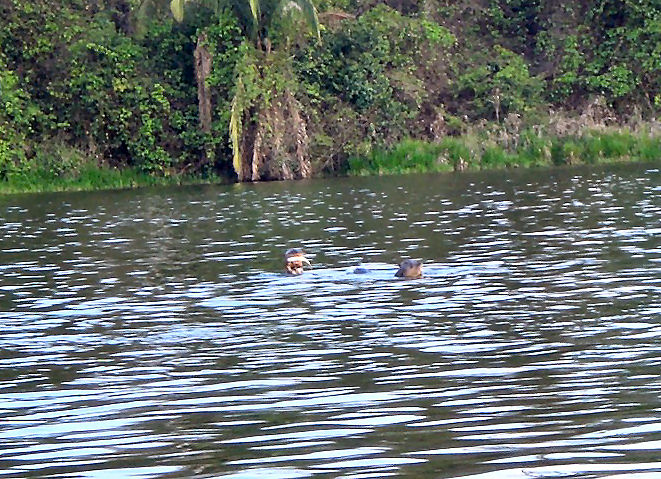
Just after I had climbed out and changed back into my normal clothes a group of around 4 or 5 Giant River Otters were visible about 100m from where we had been swimming although they were a bit too far away to see properly, even though binoculars. However, we then took a boat trip on the lake and were able to get a bit closer to these majestic animals as they frolicked around on the surface and occasionally ate a large, juicy fish. The guide then explained that, as well as the Giant Otters, other animals that lived in the lake included electric eels, caimans, sting rays and at least 5 different types of piranha! Which is probably why he never told me before I went for a swim!
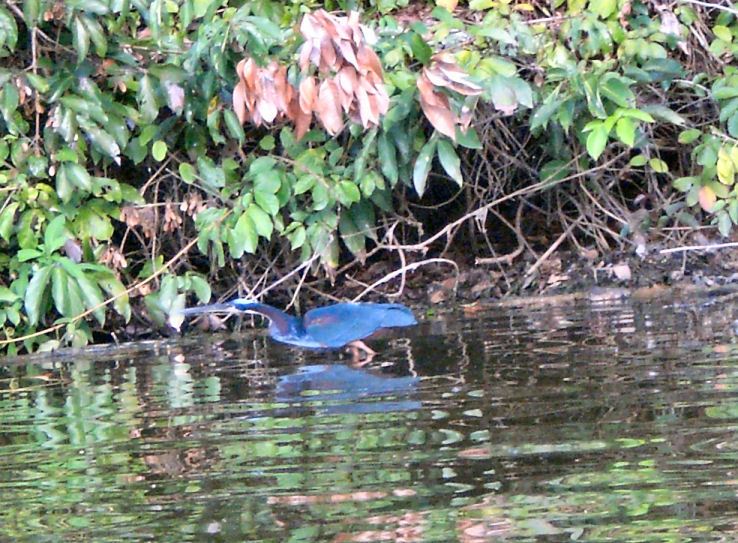
After we had observed them for about 15 minutes the otters then disappeared back down into the depths of the lake and the next creature to make an appearance was the Hoatzin. This large, unusual (some might also say prehistoric, due to the claws that can be found on young Hoatzins to help them climb trees) looking bird was perched in a tree on the edge of the lake but unfortunately disappeared before I was able to get a good photo of it. A Grey-necked Woodrail was then spotted making its way through the undergrowth followed by an Anhinga (also known as a Snakebird because of its long, thin neck) high up in a tall tree. Shortly afterwards we were able to see what looked like a little, blue heron wading through the shallows. Apparently the name of this bird is the Little Blue Heron. I wonder how long it look them to think up that name.
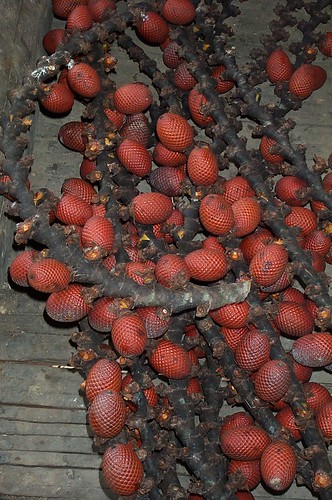
Our guide (who also seemed to spot things long before we even know they were there) then pointed out a group of Red Howler Monkeys in a tall Aguaje (or Moriche) Palm tree. Aguajes are small red fruits that are very rich in vitamin A and also in the female hormone oestrogen so the local males are warned not to eat too many of these fruit or they risk growing breasts! The group was split into two sections with a mother and small baby in one part of the tree and two adult males in another part. They didn't really do too much though, other than scratch themselves.
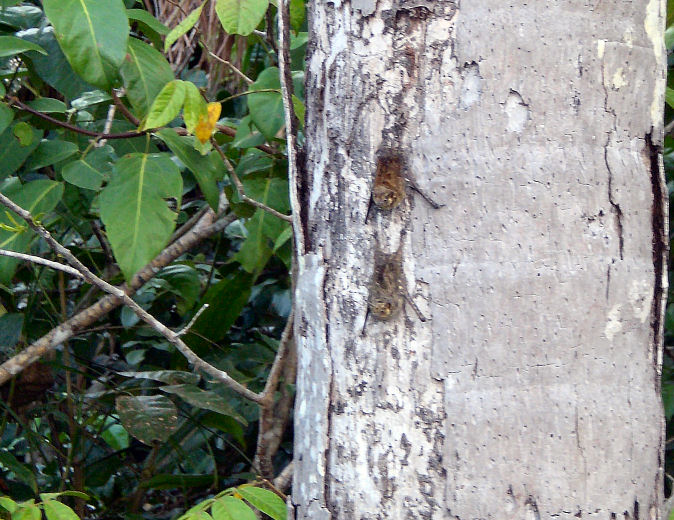
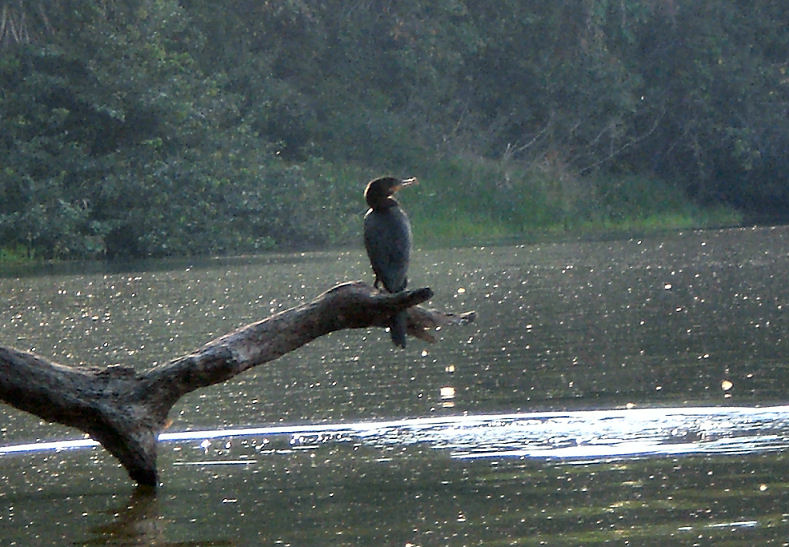
Then, on the trunk of another tree, our guide spotted three small bats sleeping. Once we got a bit closer it was possible to see that they appeared to be Proboscis Bats and they stayed there quite happy whilst we watched them for about 5 minutes before one suddenly woke up with a start and they all flew off. On a large branch which stuck out far into the lake a large Neotropic Cormorant was resting in the sunshine. As we approached it spread its long wings and flew off a short distance before landing on the surface.
Next up was a spectacular looking Rufescent Tiger Heron. I had some real difficulty in seeing it as it was very well camouflaged against the background foliage, with the black and chestnut plumage which indicated that it was a young specimen of the species, and because it stayed extremely still (so still that I commented that it must have been a stuffed model that had been previously planted there by the guide). It was only when the boat was a few feet away from it, and its position had been pointed out to me, that I was able to see it.
By now it was mid afternoon and whilst it was still very hot the soft breeze that was blowing over the lake made the conditions very nice and this, along with the stunning scenery, made the whole occasion very pleasant indeed. Our boat was now heading towards the small channel which ran from the lake back down to a small resting place about 3km along the trail which we had taken to reach the lake and from where we would have to walk back to the entrance (and our boat back to the lodge).
But even in this channel there was still the opportunity to see some wildlife. Another Grey-necked Woodrail made an appearance along with a few small turtles (or at least the tops of their heads, all that was visible of them above the water). Someone shouted out in Spanish that they had seen a head (cabeza) in the water not far from the boat but I misheard and thought they said beer (cerveza) which I thought was rather surprising and also quite welcoming. However, it actually was a cabeza and it belonged to a large Black Caiman which is a lot larger (and more dangerous) that the Spectacled Caiman we had seen the previous day. They are also usually nocturnal so it was quite surprising to see one during the day, especially this close. But thankfully it totally ignored us as we drifted quietly past.
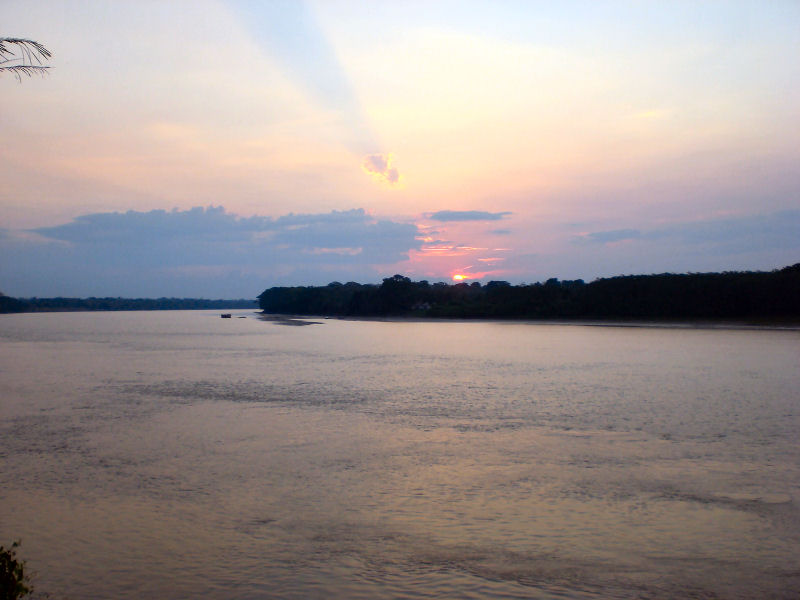
Once we had reached the mooring point of the canoe it was late afternoon and was just started to get a bit dark. It had been a long day and so the 3km walk back to the entrance took rather longer than when we had made it earlier and by the time we reached our riverboat there were a lot of aching feet and legs amongst us. A took only a short time before we reached our lodge and, as the sun set over the trees on the opposite side of the river we dragged ourselves wearily up the steps leading up to the entrance and from there to our respective huts for a well deserved rest.
For the first 30 minutes not much happened apart from the parrots occasionally making a fly past. Apparently they always check out the area to ensure that it is safe. Once this had been established they became more adventurous and began first to perch on the branches which were overhanging the cliff and gradually, one-by-one, making their way down onto the actual cliff-face where they began to nibble at the clay. There are two main theories as to why the parrots (and many other animals) congregate at such sites to eat clay. The first one is that they clay contains nutritive minerals that are good for the parrot and the second is that they clay helps to protect them from any toxins that may be in their diet, from seeds or fruit that may be poisonous.
There are five parrots that are commonly seen at this particular lick but this morning we saw only two of them the Dusky-headed Conure (or Parakeet) and the Orange-cheeked Parrot, both so-called for obvious reasons. And they were soon covering the cliff in large numbers (2). After another half an hour they had had enough and disappeared back into the jungle.
The morning´s breakfast brought us a tropical fruit salad and scrambled turtles eggs which tasted only slightly different to the usual chicken eggs and maybe slightly more creamy in textile.
The next excursion took us first to Isla Rolin, more commonly known as "Monkey Island" due to it being used as a refuge for rescued pet monkeys who are then trained to live back in the wild once more. Unfortunately the island is quite large and almost totally covered with thick jungle and, despite calling for them and visiting a few different locations, no monkeys at all were spotted during our visit.
Next on our itinerary was Lago Sandoval, an oxbow lake formed many, many years ago when a meander in the Madre de Dios river became so tight that the river broke through the narrow body of land between its bend and left behind this large u-shaped lake.
Whilst travelling back down river to reach the entrance point for the lake we passed several large floating dredging platforms which are used to try and extract gold from the river silt. It often takes many days of washing many tons of silt to obtain only a few grams of tiny gold grains and the miners live in very poor conditions. Also, mercury is used to finally extract the gold from the silt and this can cause many problems with the health of both the miners and the surrounding environment and the creatures that live there. Gold mining has long been one of the largest industries in the Madre de Dios region and it is thought that much of the gold used by the Incas came from here which was at once part of the Antisuyo region of the Inca Empire.
A Peruvian River Police boat also sped past us on its way to some misdemeanour further up river whilst on the banks a number of Little White Egrets were spotted. A short distance later a family of local Indians, who lived in one of the tiny communities dotted along the river, were bathing in the river. Although by the look of the water they probably came out even more dirty than when they went in!
Once we reached the entrance point to Lago Sandoval we had to walk for about half a kilometre to reach a small complex where we had to sign in as part of a survey carried out by the local tourist board. But during the walk from the river to this complex we firstly heard, and then briefly saw, a group of Red Howler Monkeys making their way rather noisily through the trees above.
Once we had passed the entrance complex we had another 5km to walk through the jungle to the lake along a well defined path that was lined on both side with thick jungle. We were able to see more of the various trees and plants we had been introduced to the previous day along with many more specimens of ants (including leaf-cutter ants, carrying some huge bits of leaf), a small gecko and some very colourful butterflies. The weather was very hot and humid and it was quite hard going but I really enjoyed it as this seemed exactly like the jungle I had expected to see from its portrayal in films and on television.
Just before we reached the lake we passed a small community containing a number of huts. One of the huts functioned as a restaurant and shop which sold expensive (unsurprisingly given the journey they had to get there) cold drinks. Here we were given our lunch, a typical jungle dish called juanes - rice, chicken and an egg wrapped up in a banana leaf and steamed. It was quite similar to another common Peruvian dish, the tamale and quite tasty. However, the heat and humidity was by now almost overwhelming and the conditions were just like being in a sauna and the sweat was just dripped off all of us. Even the guide, who was from this area, said that the heat and humidity were unusually high for that time of year.
Luckily we then had a chance to cool down with a swim in Lago Sandoval which lay at the bottom of a small hill just outside the tiny community. Once I had changed into my swimming costume and plunged into the waters of the lake I found it to be quite warm in the shallows but as I moved into the deeper section there were cold currents below the surface which swirled upwards once I disturbed them with my movements. This, along with a soft, sandy bottom of the lake resulted in quite a strange feeling as I waded through the lake, despite the idyllic setting. Our guide had assured us that we would be perfectly safe whilst swimming here but when I asked him which creatures actually lived in the lake he replied that he would tell me later, once I was back on dry land. This was quite worrying and my fears weren't helped when I felt (or at least thought I felt) small creatures moving past my legs and feet under the water which caused me to jump a few times. There were also many flies visible on the surface so I probably swallowed a large number of them too. Unsurprisingly I decided to cut short my swimming session not long afterwards!
Just after I had climbed out and changed back into my normal clothes a group of around 4 or 5 Giant River Otters were visible about 100m from where we had been swimming although they were a bit too far away to see properly, even though binoculars. However, we then took a boat trip on the lake and were able to get a bit closer to these majestic animals as they frolicked around on the surface and occasionally ate a large, juicy fish. The guide then explained that, as well as the Giant Otters, other animals that lived in the lake included electric eels, caimans, sting rays and at least 5 different types of piranha! Which is probably why he never told me before I went for a swim!
After we had observed them for about 15 minutes the otters then disappeared back down into the depths of the lake and the next creature to make an appearance was the Hoatzin. This large, unusual (some might also say prehistoric, due to the claws that can be found on young Hoatzins to help them climb trees) looking bird was perched in a tree on the edge of the lake but unfortunately disappeared before I was able to get a good photo of it. A Grey-necked Woodrail was then spotted making its way through the undergrowth followed by an Anhinga (also known as a Snakebird because of its long, thin neck) high up in a tall tree. Shortly afterwards we were able to see what looked like a little, blue heron wading through the shallows. Apparently the name of this bird is the Little Blue Heron. I wonder how long it look them to think up that name.
Our guide (who also seemed to spot things long before we even know they were there) then pointed out a group of Red Howler Monkeys in a tall Aguaje (or Moriche) Palm tree. Aguajes are small red fruits that are very rich in vitamin A and also in the female hormone oestrogen so the local males are warned not to eat too many of these fruit or they risk growing breasts! The group was split into two sections with a mother and small baby in one part of the tree and two adult males in another part. They didn't really do too much though, other than scratch themselves.
Then, on the trunk of another tree, our guide spotted three small bats sleeping. Once we got a bit closer it was possible to see that they appeared to be Proboscis Bats and they stayed there quite happy whilst we watched them for about 5 minutes before one suddenly woke up with a start and they all flew off. On a large branch which stuck out far into the lake a large Neotropic Cormorant was resting in the sunshine. As we approached it spread its long wings and flew off a short distance before landing on the surface.
Next up was a spectacular looking Rufescent Tiger Heron. I had some real difficulty in seeing it as it was very well camouflaged against the background foliage, with the black and chestnut plumage which indicated that it was a young specimen of the species, and because it stayed extremely still (so still that I commented that it must have been a stuffed model that had been previously planted there by the guide). It was only when the boat was a few feet away from it, and its position had been pointed out to me, that I was able to see it.
By now it was mid afternoon and whilst it was still very hot the soft breeze that was blowing over the lake made the conditions very nice and this, along with the stunning scenery, made the whole occasion very pleasant indeed. Our boat was now heading towards the small channel which ran from the lake back down to a small resting place about 3km along the trail which we had taken to reach the lake and from where we would have to walk back to the entrance (and our boat back to the lodge).
But even in this channel there was still the opportunity to see some wildlife. Another Grey-necked Woodrail made an appearance along with a few small turtles (or at least the tops of their heads, all that was visible of them above the water). Someone shouted out in Spanish that they had seen a head (cabeza) in the water not far from the boat but I misheard and thought they said beer (cerveza) which I thought was rather surprising and also quite welcoming. However, it actually was a cabeza and it belonged to a large Black Caiman which is a lot larger (and more dangerous) that the Spectacled Caiman we had seen the previous day. They are also usually nocturnal so it was quite surprising to see one during the day, especially this close. But thankfully it totally ignored us as we drifted quietly past.
Once we had reached the mooring point of the canoe it was late afternoon and was just started to get a bit dark. It had been a long day and so the 3km walk back to the entrance took rather longer than when we had made it earlier and by the time we reached our riverboat there were a lot of aching feet and legs amongst us. A took only a short time before we reached our lodge and, as the sun set over the trees on the opposite side of the river we dragged ourselves wearily up the steps leading up to the entrance and from there to our respective huts for a well deserved rest.
Sunday, October 5, 2008
1st October 2008 - Jungle Trip Day Three
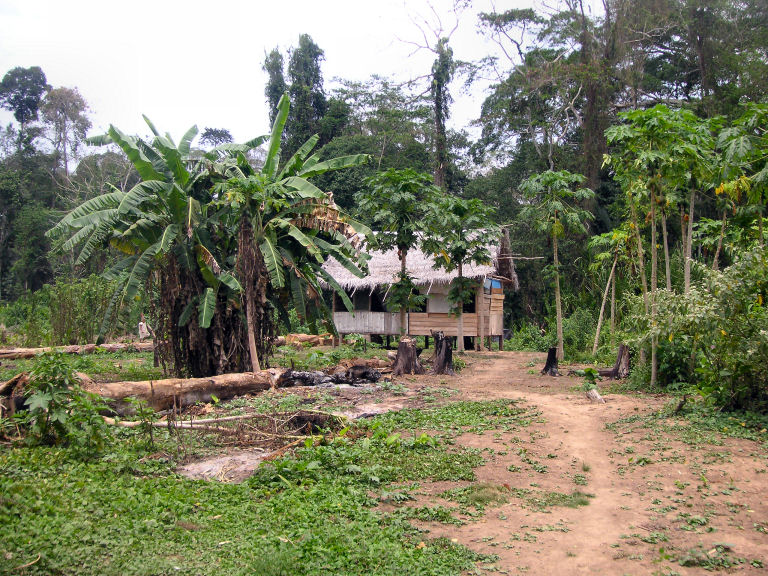
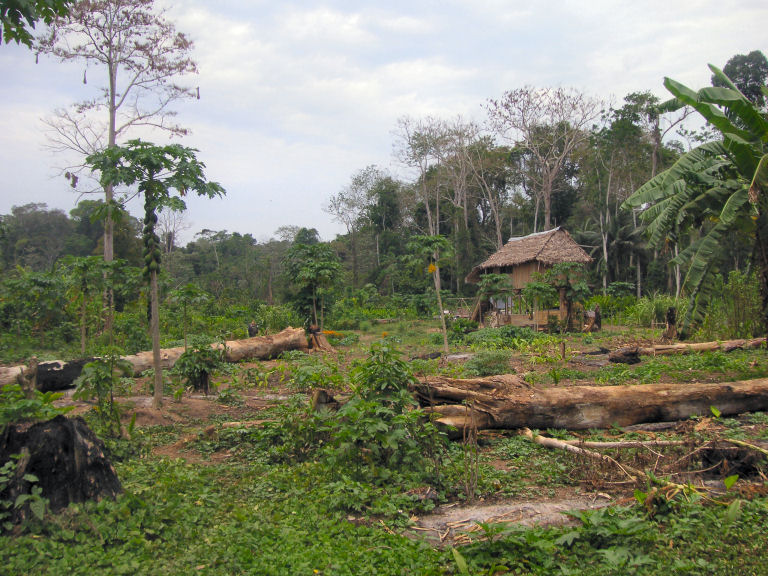
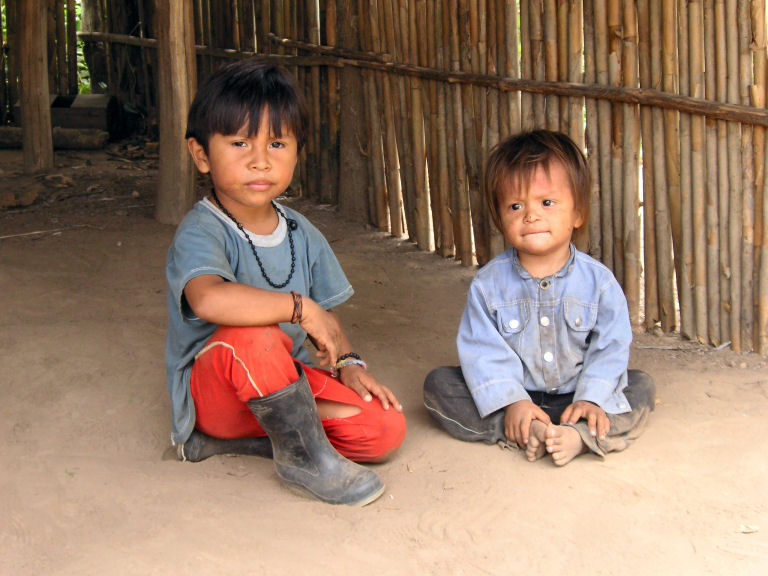
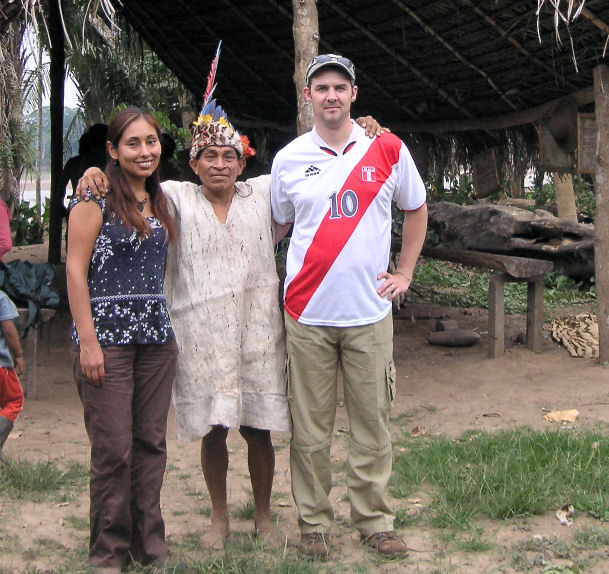
Today, our first trip was around 2 hours down-river to the Palma Real (2) community, close to the Bolivian border and home to a group of indigenous natives, the Ese'Eja (who are also known as the Huarayo, Ese'Eja being the word for "people" in their own language). Here we met the local chief who gave a talk on the Ese'Eja culture. He could speak a little bit of Spanish but mostly he spoke in the tribe's own language (nowadays the children of the tribe are taught both languages). The Ese'Eja were once very numerous (having up to 15000 members at one point) but today they number only about 500 and are found only in the Madre de Dios region of SE Peru and the Pando region of Northern Bolivia. The chief mentioned that he was originally from an area in the Puno region of Peru but had moved here to Madre de Dios when he was a young man.
He wore one of their traditional cloth robes called a cushma (this particular one pretty filthy and hole-ridden), made from the pounded bark of the Yanchama tree but nowadays many of the tribe wear modern clothes, even shoes which the chief still finds very uncomfortable to wear. He also wore a colourful head-dress made up from the feathers of various birds.
He mentioned that he, as chief, was able to have up to five "wives" although there is no real marriage ceremony among his people, the new "wife" simply moves into the males household. Alternatively, for divorce the either one of the couple moves out of the household.
In the past a local tribe used to live in one large communal house but today each family has its own, separate dwelling. The adult males generally farm, fish or hunt (a common source of income for the Ese'Eja is from gathering Brazil Nuts) whereas the women (who can also assist with fishing and the lesser farming tasks) tend to weave and manufacture baskets or jewellery (much of which is sold to tourists, a number of examples were on sale in a small hut behind the presentation area).
The chief also showed us a bottle of masato, a drink made from yucca which is first cooked, then mashed up before being fermented. Originally this was done by chewing up the mashed yucca in the mouth then spitting it back into the pot. This is still occasionally done today but fermentation can also be carried out using sugar cane. If it is left for some time the drink can become quite strong, with a high alcohol level and it was quite common for the local men to get very drunk on special occasions. We declined his invitation to drink some of it but he was still very happy to pose with us after he had finished his presentation.
The next visit was to a local chakra (farm) where many different crops, plants and fruits (bananas, coconuts, lemons, passion fruits, papayas, cacao) were grown. Firstly our guide showed us the Sangre de Grado (Dragon's Blood) tree which, when cut with a machete, produces a red sap that is thought to have various healing properties. I had a small cut on my right hand and so a little bit was rubbed onto the cut but nothing really happened unfortunately.
Other medicinal plants were also grown here such as una de gato and ayahuasca. The latter is commonly used in religious ceremonies that are carried out by various Amazon tribes due to its hallucinogenic properties. The ayahuasca vines are boiled in water (often along with the leaves of other similar plants in order to produce a stronger effect) to produce a strong "tea" which, when drunk, produces firstly heavy vomiting (which helps to cleanse any parasites from the body) and secondly strong psychoactive episodes including hallucinations and visions. If we'd have chosen a longer package we would have had the chance to see a ceremony which is a bit of a regret.
We also saw a number of plants whose leaves produced a strong smell of balsam (such as in products like muscle rub) when crushed as well as non-medicinal plants such as garlic, mint and ginger. We were also able to try a few example of fruit (papaya, coconut, banana), taken directly from the tree. The cacao tree produced large, oval pods which contain two or three dozen beans which are covered in a thick, sweet pulp which tastes delicious. The beans themselves taste quite bitter. However, once the beans have fermented, dried, roasted and their shells are removed the fat inside is used to make chocolate.
Our guide also found a tree that was home to a colony of tarantulas. In fact a large specimen was briefly visible on the tree trunk before it scuttled back inside its nest. The entrance to the nest was covered in a thick web but our guide was able to poke around inside to try and catch one of the giant spiders. Unfortunately he was only able to collect two legs but I have no idea whether these came from just one spider or from two. He then managed to find another nest, this time in a plant, and on this occasion was able to capture a small tarantula and let it walk around on his hand. Tarantulas are not particularly dangerous to humans and at worst there bite can be compared to a bad bee or wasp sting and so our guide was never in any real danger. A number of very colourful beetles and butterflies were also around the farm.
After lunch we had the rest of the day off, to do whatever we wanted. So, after a brief rest, we decided to try out the swimming pool. Overnight it usually filled up with frogs and insects and early every morning a pair of lodge employers had to clean out all the dead bugs, a process which they regularly repeated throughout the day. But it was virtually an impossible task and when we entered the pool there were still numerous winged things floating about on the surface. We were soon almost joined in the pool by another winged thing, one of the Lodge macaws who decided to fly down from his usual perch for a drink. We had been warned by the bird's keeper that it could be a bit aggressive and so we tried not to upset it too much and eventually, once it had drank its fill from the water around the pool, it flew back up to its perch and left us to swim in peace.
By now the lodge was very quiet as, apart from our our group, everyone else was out on their various excursions. So we had the place virtually to ourselves. After a quick visit to the shop where we bought a number of souvenirs we decided to have another walk around the jungle trails behind the lodge, this time on our own without a guide. There were numerous different trails, over a wide area of jungle but there was no real danger of getting lost and, as long as we were back before darkness fell, no real risk of being attacked by any dangerous jungle creatures.
I wanted to revisit the parrot clay lick area that we had been to the previous morning. The parrots probably wouldn't be there at this time of the day but I thought there may be a chance to see some other animals. After we had explored the jungle for an hour or so we were able to follow the signpost to the lick without any difficulty but when we got there unfortunately there was nothing to be seen other than some large flies which buzzed around my head when I walked down to the edge of the river. I also heard voices from the jungle on the other side of the small stream but couldn't see where they may have been coming from. I know there were various tribes living in that region so maybe it was one of those. Fortunately they were all well known to the outside world and none were considered dangerous.
We sat around in the hide for about 30 minutes to see if anything with appear but nothing did and by that time it was late afternoon and just beginning to get dark so we decided to leave. During our journey through the jungle we had seen, and occasionally glimpsed through the trees, some of the other groups who had just arrived at the lodge and were being given their initial guided tour. We avoided them however as we weren't sure we were actually allowed to wander around the jungle on our own and so didn't want to bump into one of the guides. We also wanted to have a go on the Tarzan rope that we had been shown on our own guided tour and so waited until the tour group in front of us had passed it before enjoying a few swings of our own.
Later on however we ran into both of the tour parties as they used the same trails as us and we were unable to avoid them. One of the guides seemed rather surprised to see us there and asked us if we were lost. When we replied that we weren't he advised us to make sure we didn't get lost as they would then have to come looking for us. He also warned us that it was almost dark and to make sure we had left the jungle before it was fully dark as then the snakes and other dangerous creatures would be around.
We were already heading out before he had told us this and managed to make it back to our hut without any difficulties where we spent our last night at the lodge prior to leaving the following morning.
He wore one of their traditional cloth robes called a cushma (this particular one pretty filthy and hole-ridden), made from the pounded bark of the Yanchama tree but nowadays many of the tribe wear modern clothes, even shoes which the chief still finds very uncomfortable to wear. He also wore a colourful head-dress made up from the feathers of various birds.
He mentioned that he, as chief, was able to have up to five "wives" although there is no real marriage ceremony among his people, the new "wife" simply moves into the males household. Alternatively, for divorce the either one of the couple moves out of the household.
In the past a local tribe used to live in one large communal house but today each family has its own, separate dwelling. The adult males generally farm, fish or hunt (a common source of income for the Ese'Eja is from gathering Brazil Nuts) whereas the women (who can also assist with fishing and the lesser farming tasks) tend to weave and manufacture baskets or jewellery (much of which is sold to tourists, a number of examples were on sale in a small hut behind the presentation area).
The chief also showed us a bottle of masato, a drink made from yucca which is first cooked, then mashed up before being fermented. Originally this was done by chewing up the mashed yucca in the mouth then spitting it back into the pot. This is still occasionally done today but fermentation can also be carried out using sugar cane. If it is left for some time the drink can become quite strong, with a high alcohol level and it was quite common for the local men to get very drunk on special occasions. We declined his invitation to drink some of it but he was still very happy to pose with us after he had finished his presentation.
The next visit was to a local chakra (farm) where many different crops, plants and fruits (bananas, coconuts, lemons, passion fruits, papayas, cacao) were grown. Firstly our guide showed us the Sangre de Grado (Dragon's Blood) tree which, when cut with a machete, produces a red sap that is thought to have various healing properties. I had a small cut on my right hand and so a little bit was rubbed onto the cut but nothing really happened unfortunately.
Other medicinal plants were also grown here such as una de gato and ayahuasca. The latter is commonly used in religious ceremonies that are carried out by various Amazon tribes due to its hallucinogenic properties. The ayahuasca vines are boiled in water (often along with the leaves of other similar plants in order to produce a stronger effect) to produce a strong "tea" which, when drunk, produces firstly heavy vomiting (which helps to cleanse any parasites from the body) and secondly strong psychoactive episodes including hallucinations and visions. If we'd have chosen a longer package we would have had the chance to see a ceremony which is a bit of a regret.
We also saw a number of plants whose leaves produced a strong smell of balsam (such as in products like muscle rub) when crushed as well as non-medicinal plants such as garlic, mint and ginger. We were also able to try a few example of fruit (papaya, coconut, banana), taken directly from the tree. The cacao tree produced large, oval pods which contain two or three dozen beans which are covered in a thick, sweet pulp which tastes delicious. The beans themselves taste quite bitter. However, once the beans have fermented, dried, roasted and their shells are removed the fat inside is used to make chocolate.
Our guide also found a tree that was home to a colony of tarantulas. In fact a large specimen was briefly visible on the tree trunk before it scuttled back inside its nest. The entrance to the nest was covered in a thick web but our guide was able to poke around inside to try and catch one of the giant spiders. Unfortunately he was only able to collect two legs but I have no idea whether these came from just one spider or from two. He then managed to find another nest, this time in a plant, and on this occasion was able to capture a small tarantula and let it walk around on his hand. Tarantulas are not particularly dangerous to humans and at worst there bite can be compared to a bad bee or wasp sting and so our guide was never in any real danger. A number of very colourful beetles and butterflies were also around the farm.
After lunch we had the rest of the day off, to do whatever we wanted. So, after a brief rest, we decided to try out the swimming pool. Overnight it usually filled up with frogs and insects and early every morning a pair of lodge employers had to clean out all the dead bugs, a process which they regularly repeated throughout the day. But it was virtually an impossible task and when we entered the pool there were still numerous winged things floating about on the surface. We were soon almost joined in the pool by another winged thing, one of the Lodge macaws who decided to fly down from his usual perch for a drink. We had been warned by the bird's keeper that it could be a bit aggressive and so we tried not to upset it too much and eventually, once it had drank its fill from the water around the pool, it flew back up to its perch and left us to swim in peace.
By now the lodge was very quiet as, apart from our our group, everyone else was out on their various excursions. So we had the place virtually to ourselves. After a quick visit to the shop where we bought a number of souvenirs we decided to have another walk around the jungle trails behind the lodge, this time on our own without a guide. There were numerous different trails, over a wide area of jungle but there was no real danger of getting lost and, as long as we were back before darkness fell, no real risk of being attacked by any dangerous jungle creatures.
I wanted to revisit the parrot clay lick area that we had been to the previous morning. The parrots probably wouldn't be there at this time of the day but I thought there may be a chance to see some other animals. After we had explored the jungle for an hour or so we were able to follow the signpost to the lick without any difficulty but when we got there unfortunately there was nothing to be seen other than some large flies which buzzed around my head when I walked down to the edge of the river. I also heard voices from the jungle on the other side of the small stream but couldn't see where they may have been coming from. I know there were various tribes living in that region so maybe it was one of those. Fortunately they were all well known to the outside world and none were considered dangerous.
We sat around in the hide for about 30 minutes to see if anything with appear but nothing did and by that time it was late afternoon and just beginning to get dark so we decided to leave. During our journey through the jungle we had seen, and occasionally glimpsed through the trees, some of the other groups who had just arrived at the lodge and were being given their initial guided tour. We avoided them however as we weren't sure we were actually allowed to wander around the jungle on our own and so didn't want to bump into one of the guides. We also wanted to have a go on the Tarzan rope that we had been shown on our own guided tour and so waited until the tour group in front of us had passed it before enjoying a few swings of our own.
Later on however we ran into both of the tour parties as they used the same trails as us and we were unable to avoid them. One of the guides seemed rather surprised to see us there and asked us if we were lost. When we replied that we weren't he advised us to make sure we didn't get lost as they would then have to come looking for us. He also warned us that it was almost dark and to make sure we had left the jungle before it was fully dark as then the snakes and other dangerous creatures would be around.
We were already heading out before he had told us this and managed to make it back to our hut without any difficulties where we spent our last night at the lodge prior to leaving the following morning.
Saturday, October 4, 2008
2nd October 2008 - Puerto Maldonado
Our last night in the jungle passed without any real incident although I did attempt to sleep outside in the hammock once again, also without success due to all the insects. I sat and watched all the night time creatures for about an hour and in the moonlight it was just possible to see bats flitting around whilst trying to feast on the multitude of bugs. These bugs included fireflies and it was quite eerie to see their tiny little lights moving around all over the place.
Then, after another breakfast which included scrambled turtle eggs, we left the lodge at around 9:30am for the 45 minute boat ride back to Puerto Maldonado. Other than ourselves everyone else was flying out from Puerto Maldonado airport later that day but as they had a few hours to kill beforehand they were also visiting the local market along with a guide. We would not be flying until the following day and so we first needed to find a hotel to stay in for the night.
When we arrived at the port we bought some drinks at the shop kiosk there before being taken by minibus to the office of the tour operator who had organised our package. Once there we told our guide we wanted somewhere to stay that was cheap but decent and close to the town centre. He suggested one called the Hostal Moderno which was just down the street (Jiron Billinghurst) from the tourism office we were dropped off at.
I guess it must have been one of those ironic name like short people being called "Lofty" as it may have been modern when it was first built (about 50 years ago by the look of it) but it certainly couldn't be described as such nowadays. There were only shared toilets and bathrooms and they were pretty filthy it has to be said. The beds were quite comfortable but the room was crawling with ants and we had to ask the receptionist to spray our room to try and get rid of them. This worked quite well and the fan we also asked for managed to cool the place down sufficiently that we were able to stay there without sweating too much. Luz described it as "the worst hotel I have ever stayed in" but I think it was still far better than the place we stayed in for one night on Amantani Island in Lake Titicaca on our previous trip to Peru. Still, at least it was very cheap at only 15 dollars each per night.
Now we had sorted out somewhere to stay we now needed to find out how to spend the rest of the day in Puerto Maldonado. Our guide had also suggested that we should hire a couple of motorbikes in order to explore the area but when we tried the guy refused to let us as we said we had never ridden one before. I guess we could have tried another place but I wasn't really comfortable with the idea anyway as, with all the other motorbikes whizzing around the place, I thought it could potentially be quite dangerous and wasn't worth the risk.
After 3 days in the jungle our clothes were rather dirty and smelly and so we decided to take them to a launderette. We found one on the main road, Avenida Leon Velarde which leads SW from the Plaza de Armas and is lined with many different shops. Their prices (they charged by the kilo) were very reasonable and so we left a few black bags with them which they said would be ready at 7pm that evening. After visiting the ice cream parlour that was next door to the launderette we then decided to visit the market which was about 5 minutes from the main square by motor-taxi.
A was a typical Peruvian market with no real difference to one in any other town or city in Peru. It was possible to buy all sorts of things, including the ubiquitous pirate CDs and DVDs, at very low prices as well as various types of fruit. However, one difference between this market and others I've been to in Peru was that here it was possible to get strange jungle fruits that aren't available elsewhere although we passed up the opportunity to do so as we'd already tasted many of them during our trip to the jungle. One thing I did want to buy was some new insoles for my trainers as they were the only pair of shoes I had brought with me on the trip and they were now rather ragged from all the jungle walks we had done. Unfortunately my feet are pretty big (Euro size 45), especially for a country like Peru where the average height of a person is a lot lower than in Europe (5'5" for a man, 5'3" for a woman), and it proved impossible to find anywhere that sold them in that size.
Whilst in the market Luz discovered that some of the coins she had been given by the woman in the kiosk at the port were fake and so, as we were planning to take the ferry across the river anyway, we returned to the port where we were able to change the coins for real ones. The woman actually admitted that she had given Luz false coins. And it wasn't the first time it had happened here in Puerto Maldonado, we had noticed a few other false coins from unknown sources.
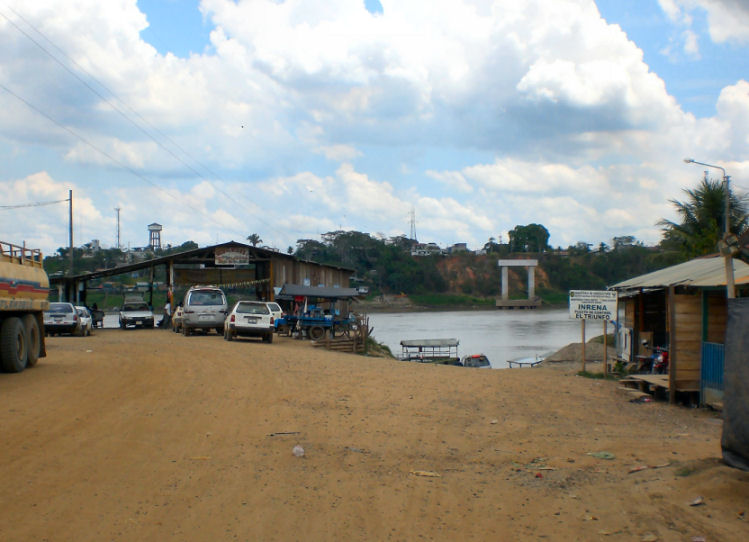
At the port we asked about the possibilities in hiring a boat to visit other parts of the area along the river but were told that, for just the two of us, it would be quite expensive. Therefore we decided to just take the passenger ferry across the river to visit the small community of El Triumfo. There is also a vehicle ferry which is still in use due to the current postponement of the construction of the Guillermo Billinghurst bridge because of financial problems. At the moment there are just two bridge supports on each side of the river with no more work being planned any time soon. The bridge was part of a plan to build an Interoceanic Highway that would link the southern Pacific ports of Peru with the Atlantic ports of Brazil. Parts of the highway have already been constructed but due the project has suffered greatly with delays and financial problems so far.
Whilst we were crossing the river on the ferry we were told that there was a bus that was just about to leave for the town of Iñapari close to the Brazilian border, a journey which takes around 4-5 hours. It is then possible to cross over the Rio Acre to the small town of Assis Brazil. Luz was very keen to do this so that she could say she'd been to Brazil but I was very wary of doing so as I didn't want to travel all the way there, in the heat of the afternoon, only to spend a few hours there and then come back. I'd have preferred to have spent a few days doing so but that wasn't possible. In the end I managed to persuade Luz that the trip wasn't really sensible. There really wasn't a lot to do or see in El Triumfo but the weather was extremely hot and so we paused for some time at a small kiosk where we drank a number of bottle of very cold and refreshing Inka Cola before taking the ferry back across the Rio Madre de Dios to Puerto Maldonado.
One important industry in the Madre de Dios regions is logging and as we were leaving the main port we saw a huge lorry trying to make its way up the steep, winding road which lead from the port up to the main part of the city. It had a lot of difficulties navigating the tight bends and became quite a popular attraction for the hour or so it took to make the journey, holding up all the other traffic on the road during that time.
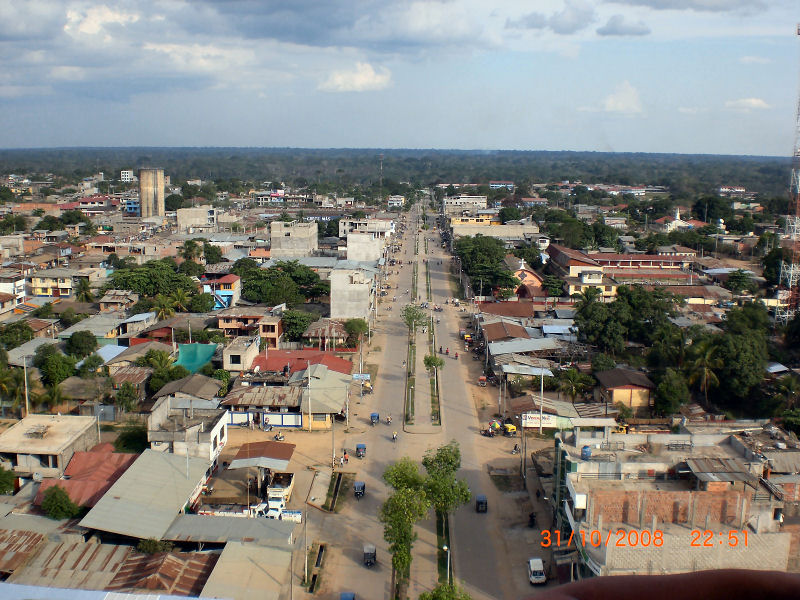
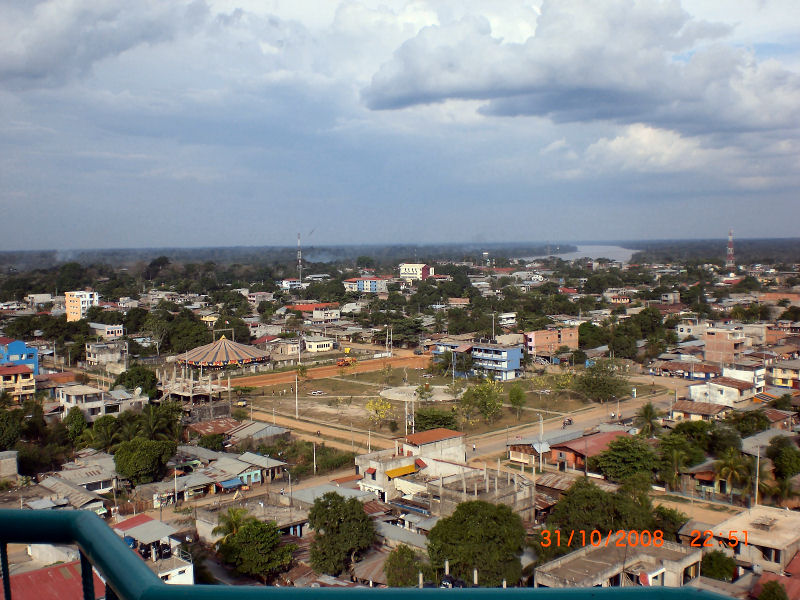
The next site on our tour of Puerto Maldonado was the "Obelisk", an 8 storey observation tower which offers very views of the city, its jungle surroundings and the two rivers (Rio Madre de Dios and Rio Tampopata) that converge just to the east of Puerto Maldonado. The entrance fee is apparently a few sols but the guy at the desk had disappeared when we first entered and so we were able to climb (the lift was out of order) to the top for free! The view from the top was very nice and it was possible to see much of the surroundings, including more fires, but due to my vertigo I kept well away from the edge!
After heading back to the Plaza de Armas we took the opportunity to try out one of the many Internet cafes there were dotted around the square. The rate was very cheap (1 sol per 30 minutes) and we were able to catch up on news and emails. We then went next door to another ice cream parlour for a snack and yet another large bottle of Inka Cola. I have no idea how much of this drink I consumed during my time in Peru but it must surely be measured in gallons! And I've managed to find a company in Belgium that can supply it so it appears my Inka Cola drinking days are not quite over yet!
We had now just about exhausted everything that was possible to do and see in Puerto Maldonado and it was only late afternoon. The conditions were still very hot and humid and so we decided to head back to our fan-cooled room at the Hostel Moderno for a rest until the evening and to get cleaned up (if that was possible given the state of the bathroom!). At least the ants seemed to have disappeared now our room had been sprayed.
At 7pm we headed back to the launderette to pick up our laundry only to be told that it wasn't quite ready yet. The woman in charge said that it would be delivered to our hotel once it was finished but that they would close at 8pm. We hoped it would be ready in time and we wouldn't have to wait until the following day to receive it as we had no other clothes to wear apart from those we were wearing and they were by now rather dirty and smelly from having worn them most of the day. Luckily the turned up just up time.
We had been recommended a restaurant just around the corner from the hotel and it was OK but nothing special apart from the small jungle on the ground floor which contained various plastic jungle animals. Maybe the mixed grill we ordered used meat from these animals as it was pretty tough and we left most of it. We drank the two 2L bottles of Inka Cola though!
Afterwards we visited a small "video-pub" on the Plaza de Armas for a few drinks which showed Peruvian music videos from the 80s. Apparently 80s music was just as cheesy, and the 80s clothes and hairstyles were just as rubbish in Peru as they were in England. We were told that there had once been a disco in Puerto Maldonado called El Jaguar that also contained a zoo, or more correctly a zoo that became a disco during the evening. However, due to the poor conditions of the zoo and the stress the animals had suffered (no wonder!) the place had now closed. There were a few other discos in the area but as it was a Thursday evening and things were pretty quiet we decided to just go back to our hotel to sleep instead.
Then, after another breakfast which included scrambled turtle eggs, we left the lodge at around 9:30am for the 45 minute boat ride back to Puerto Maldonado. Other than ourselves everyone else was flying out from Puerto Maldonado airport later that day but as they had a few hours to kill beforehand they were also visiting the local market along with a guide. We would not be flying until the following day and so we first needed to find a hotel to stay in for the night.
When we arrived at the port we bought some drinks at the shop kiosk there before being taken by minibus to the office of the tour operator who had organised our package. Once there we told our guide we wanted somewhere to stay that was cheap but decent and close to the town centre. He suggested one called the Hostal Moderno which was just down the street (Jiron Billinghurst) from the tourism office we were dropped off at.
I guess it must have been one of those ironic name like short people being called "Lofty" as it may have been modern when it was first built (about 50 years ago by the look of it) but it certainly couldn't be described as such nowadays. There were only shared toilets and bathrooms and they were pretty filthy it has to be said. The beds were quite comfortable but the room was crawling with ants and we had to ask the receptionist to spray our room to try and get rid of them. This worked quite well and the fan we also asked for managed to cool the place down sufficiently that we were able to stay there without sweating too much. Luz described it as "the worst hotel I have ever stayed in" but I think it was still far better than the place we stayed in for one night on Amantani Island in Lake Titicaca on our previous trip to Peru. Still, at least it was very cheap at only 15 dollars each per night.
Now we had sorted out somewhere to stay we now needed to find out how to spend the rest of the day in Puerto Maldonado. Our guide had also suggested that we should hire a couple of motorbikes in order to explore the area but when we tried the guy refused to let us as we said we had never ridden one before. I guess we could have tried another place but I wasn't really comfortable with the idea anyway as, with all the other motorbikes whizzing around the place, I thought it could potentially be quite dangerous and wasn't worth the risk.
After 3 days in the jungle our clothes were rather dirty and smelly and so we decided to take them to a launderette. We found one on the main road, Avenida Leon Velarde which leads SW from the Plaza de Armas and is lined with many different shops. Their prices (they charged by the kilo) were very reasonable and so we left a few black bags with them which they said would be ready at 7pm that evening. After visiting the ice cream parlour that was next door to the launderette we then decided to visit the market which was about 5 minutes from the main square by motor-taxi.
A was a typical Peruvian market with no real difference to one in any other town or city in Peru. It was possible to buy all sorts of things, including the ubiquitous pirate CDs and DVDs, at very low prices as well as various types of fruit. However, one difference between this market and others I've been to in Peru was that here it was possible to get strange jungle fruits that aren't available elsewhere although we passed up the opportunity to do so as we'd already tasted many of them during our trip to the jungle. One thing I did want to buy was some new insoles for my trainers as they were the only pair of shoes I had brought with me on the trip and they were now rather ragged from all the jungle walks we had done. Unfortunately my feet are pretty big (Euro size 45), especially for a country like Peru where the average height of a person is a lot lower than in Europe (5'5" for a man, 5'3" for a woman), and it proved impossible to find anywhere that sold them in that size.
Whilst in the market Luz discovered that some of the coins she had been given by the woman in the kiosk at the port were fake and so, as we were planning to take the ferry across the river anyway, we returned to the port where we were able to change the coins for real ones. The woman actually admitted that she had given Luz false coins. And it wasn't the first time it had happened here in Puerto Maldonado, we had noticed a few other false coins from unknown sources.
At the port we asked about the possibilities in hiring a boat to visit other parts of the area along the river but were told that, for just the two of us, it would be quite expensive. Therefore we decided to just take the passenger ferry across the river to visit the small community of El Triumfo. There is also a vehicle ferry which is still in use due to the current postponement of the construction of the Guillermo Billinghurst bridge because of financial problems. At the moment there are just two bridge supports on each side of the river with no more work being planned any time soon. The bridge was part of a plan to build an Interoceanic Highway that would link the southern Pacific ports of Peru with the Atlantic ports of Brazil. Parts of the highway have already been constructed but due the project has suffered greatly with delays and financial problems so far.
Whilst we were crossing the river on the ferry we were told that there was a bus that was just about to leave for the town of Iñapari close to the Brazilian border, a journey which takes around 4-5 hours. It is then possible to cross over the Rio Acre to the small town of Assis Brazil. Luz was very keen to do this so that she could say she'd been to Brazil but I was very wary of doing so as I didn't want to travel all the way there, in the heat of the afternoon, only to spend a few hours there and then come back. I'd have preferred to have spent a few days doing so but that wasn't possible. In the end I managed to persuade Luz that the trip wasn't really sensible. There really wasn't a lot to do or see in El Triumfo but the weather was extremely hot and so we paused for some time at a small kiosk where we drank a number of bottle of very cold and refreshing Inka Cola before taking the ferry back across the Rio Madre de Dios to Puerto Maldonado.
One important industry in the Madre de Dios regions is logging and as we were leaving the main port we saw a huge lorry trying to make its way up the steep, winding road which lead from the port up to the main part of the city. It had a lot of difficulties navigating the tight bends and became quite a popular attraction for the hour or so it took to make the journey, holding up all the other traffic on the road during that time.
The next site on our tour of Puerto Maldonado was the "Obelisk", an 8 storey observation tower which offers very views of the city, its jungle surroundings and the two rivers (Rio Madre de Dios and Rio Tampopata) that converge just to the east of Puerto Maldonado. The entrance fee is apparently a few sols but the guy at the desk had disappeared when we first entered and so we were able to climb (the lift was out of order) to the top for free! The view from the top was very nice and it was possible to see much of the surroundings, including more fires, but due to my vertigo I kept well away from the edge!
After heading back to the Plaza de Armas we took the opportunity to try out one of the many Internet cafes there were dotted around the square. The rate was very cheap (1 sol per 30 minutes) and we were able to catch up on news and emails. We then went next door to another ice cream parlour for a snack and yet another large bottle of Inka Cola. I have no idea how much of this drink I consumed during my time in Peru but it must surely be measured in gallons! And I've managed to find a company in Belgium that can supply it so it appears my Inka Cola drinking days are not quite over yet!
We had now just about exhausted everything that was possible to do and see in Puerto Maldonado and it was only late afternoon. The conditions were still very hot and humid and so we decided to head back to our fan-cooled room at the Hostel Moderno for a rest until the evening and to get cleaned up (if that was possible given the state of the bathroom!). At least the ants seemed to have disappeared now our room had been sprayed.
At 7pm we headed back to the launderette to pick up our laundry only to be told that it wasn't quite ready yet. The woman in charge said that it would be delivered to our hotel once it was finished but that they would close at 8pm. We hoped it would be ready in time and we wouldn't have to wait until the following day to receive it as we had no other clothes to wear apart from those we were wearing and they were by now rather dirty and smelly from having worn them most of the day. Luckily the turned up just up time.
We had been recommended a restaurant just around the corner from the hotel and it was OK but nothing special apart from the small jungle on the ground floor which contained various plastic jungle animals. Maybe the mixed grill we ordered used meat from these animals as it was pretty tough and we left most of it. We drank the two 2L bottles of Inka Cola though!
Afterwards we visited a small "video-pub" on the Plaza de Armas for a few drinks which showed Peruvian music videos from the 80s. Apparently 80s music was just as cheesy, and the 80s clothes and hairstyles were just as rubbish in Peru as they were in England. We were told that there had once been a disco in Puerto Maldonado called El Jaguar that also contained a zoo, or more correctly a zoo that became a disco during the evening. However, due to the poor conditions of the zoo and the stress the animals had suffered (no wonder!) the place had now closed. There were a few other discos in the area but as it was a Thursday evening and things were pretty quiet we decided to just go back to our hotel to sleep instead.
Friday, October 3, 2008
3rd October 2008 - Puerto Maldonado and Cuzco
Although our hotel was far from the best we've ever stayed in the beds was actually quite comfortable and we managed to get a decent night's sleep once the baby in the room opposite had fallen asleep. We left the hotel very early (around 7am) the following morning and found a small cafe just around the corner which was serving breakfast. Here we had a couple of ham and cheese sandwiches washing down with yet another bottle of Inka Cola, the perfect way to start our final day in the jungle.
Afterwards it was still too early for most of the other shops to yet be open and so we decided to just sit in the Plaza de Armas and wait for an hour or so. Luz soon got talking to the respectable-looking middle-aged woman who was sat next to us on the bench and it turned out that she was also from Arequipa. Her husband was from the area and worked in Puerto Maldonado and she had been living there for a number of years.
I left them to talk and went off to explore the area surrounding the square. Just behind the square and further down the same street that our hotel was on I found a small park which overlooked the Rio Madre de Dios. The park contained a statue of Miguel Grau, the Peruvian hero of the Battle of Angamos in the War of the Pacific of 1879 to 1883, one of many honours that can be found to him throughout Peru. Unfortunately the entrance to the park was taped off and so I was unable to enter.
Elsewhere I found the tiny Puerto Maldonado cinema which was apparently showing the 3rd Star Wars film - The Attack of the Clones. So, only 6 years behind Europe then!
By the time I got back to the plaza Luz had finished her conversation with her fellow Arequipena and by that time it was around 9:30. Our flight wasn’t until 12:30 but as we couldn’t think of anything else to do we decided to go to the airport to wait and so we flagged down one of the many passing motor-taxis to take us there.
The airport was already very busy with many tourists milling around inside and outside the small departure building. The building contained a few small souvenir shops and a café, as well as toilets that had no paper and could only be flushed by pouring a bucket of water down there. Before we could board the plane we first had to pay the 30 dollars airport tax and so we queued up in front of the small window where this task could be carried out. A small disturbance was caused when one of the tour guides brought his entire party to the front of the queue so that they could pay their taxes. This rather upset a few individuals who were waiting in the queue behind, especially the guy directly behind us who made his feelings known very clearly and loudly.
Eventually we were able to go through to the equally small departure lounge, which also contained a few small souvenir shops and not much else. Through the large windows of the lounge it was possible to see some of the earlier flights land and take-off through the thick jungle which surrounded the airport.
Our own plane left on time and the short 30 minute return flight to Cuzco was just as bumpy as the outward one although, due to there being less clouds, it was at least possible to see a decent view out of the window. We passed over the high mountain range which separated Cuzco and the surrounding altiplano from the jungle. Here and there a small, deep blue mountain lake sparkled in the sun and occasionally the mountains were broken up by small, green valleys.
Once we had landed and collected our luggage it was around 1:30 and as our bus back to Arequipa was not due to leave until 8:30 that evening we had about 7 hours to kill in Cuzco. I wanted to see if it was possible to go horse riding in the area around Cuzco and just outside the luggage collection area we found a small tour agency which offered just that opportunity and told us we could be taken straight there.
The stables were situated just outside the Sacsayhuaman complex in the hills above Cuzco and after we had been dropped off there by our taxi driver we met our long-haired Quechua guide who would accompany us, on foot, during our ride.
After we had mounted our steeds the first part of our journey was along the steep path which led up from the stable to a small hill which gave fantastic views over to Sacsayhuaman and the hills surrounding Cuzco across the valley. Shortly afterwards we crossed the main road which runs from Cuzco, past other sites such as Q’enko, Puca Pucara and Tambo Machay to the Sacred Valley then made our way through a Eucalyptus forest until we reached a grassy area from which it was possible to get spectacular views of the surrounding mountains. Through these mountains, around 60km to the NW, was the marvel that is Machu Picchu.
Just next to this area was the site of the Templo de la Luna (Temple of the Moon), also known as Salapunco or Laqo. As this is quite far from the main road it usually isn’t included in the tour packages which visit the various Inca ruins around Cuzco. The temple comprises a large rock which houses a number of small caves. These caves contain various carvings in the shapes of the 4 animals which were considered most sacred to the Incas – pumas, llamas, snakes and condors as well as a number of altars were sacrifices could be carried out and niches in the rock where mummies could be kept. A small hole in the roof would have brought the light of the full moon directly down onto the main altar during the religious ceremonies that were held there.
Outside were more rock carvings, including a llama and a condor.
Alongside the large rock an archeological dig was in progress and a number of external rooms had recently been discovered. The previous day the workers had also uncovered three Inca mummies which unfortunately were covered in plastic sheeting and so we were unable to get a look at them.
Leading down from the temple complex to the main area below was a grassy slope and sit along this were 3 local women who were selling various tourist souvenirs. At least we ignored them as our guide wanted us to climb back onto our horses but eventually they managed to persuade us to have a look at their wares. I bought a tiny metal llama and a stone puma whilst Luz bought a sort of jigsaw puzzle in the shape of an Inca wall for Matthew. They had some quite good stuff actually and I would have bought more but we didn't have much money on us at the time.
Once we were finally back on our horses we climbed further up the hillside through a rocky moorland landscape. I spotted a pair of kestrels swooping through the sky close by as well as a couple of rabbits running around, possibly the next meal for the kestrels. At the top of the hill we rested for a short time whilst our guide re-arranged our stirrips so that they were more suitable for the next leg of the trip, the downhill part.
This part was actually quite tricky as the horses had to made their way along the steep, narrow, rocky path which led down to the grassy plateau below and a number of times they almost lost their footing and once my horse and Luz's actually colliding slightly although no real damage was caused. At the bottom of the hill the horses must have sensed that they were on their way back to the stable (they had probably done the same trip many times) and occasionally broke into a fast trot during which the ride became rather uncomfortable as it meant I was bouncing around in the saddle quite a lot.
We then passed back through the Eucalyptus forest and across the main road before reaching a rocky outcrop which looking out over Sacsayhuaman. Here we stopped so that our guide could take our photo but unfortunately both the photos he took turned out to be poor. He also dropped Luz's camera and damaged it slightly.
Once we had returned to the stables and dismounted our guide took us to a small chicheria (as denoted by the bundle of red plastic found outside it) for a very large, refreshing glass of chicha (corn beer).
As we were waited for our taxi which would take us back down to the Plaza de Armas we were shown a recently discovered archeological site which contained the bones of many hundreds of llamas (along with a few empty crisp packets) which had been sacrificed by the Incas during the Inti Raymi (Festival of the Sun). This ceremony is still held today, every year on the 24th June, but nowadays it is carried out purely for tourism purposes.
Once we reached the Plaza de Armas it was almost dark and as we were now quite hungry we had a pizza before going to the English-style Cross Keys pub for a few drinks. The pub also offered fine views over the lit-up plaza.
Afterwards we walked down past the Coricancha to an area which contained a number of large artsenia markets to buy a few souvenirs. My father has asked me to try and buy him a typical Peruvian hat and just inside the market I spotted a nice leather one that seemed to fit the bill very nicely. After a bit of bartering with the stall-holder I was able to get it at a very good price.
After we had left artesenia market it was time to go to the bus station to await our departure. However, due to our location we had a lot of difficulty finding a taxi driver who was willing to take us there as they were all heading back up to the Plaza de Armas. Eventually we decided it would be best to go back there in order to find a taxi to take us to the bus station. This proved a lot easier and 15 minutes later we arrived at the bus station only to be told that our bus wouldn’t actually be leaving from there but from the Cruz del Sur office which was located just around the corner from where we had earlier been trying to flag down a taxi!
In the office all the passengers who were waiting for the bus were enthralled by the Peru v Argentina volleyball match in the U20 South American Championships that were being held in Peru at that moment. We had time to see Peru lose the first 2 sets before it was time to climb onto the bus for our journey to Arequipa. This time we were upstairs and the seats were a bit more cramped than those downstairs.
After the same tourism/music documentary we had watched on the way to Cusco the movie this time was Flight Plan with Jodie Foster. I think I must have been just about the only one watching it though as it seemed every one else just went to sleep instead. It was quite silly film but as I couldn't sleep and there was nothing else to do I managed to watch it to the end.
For the rest of the 11-hour journey I again tried to sleep and yet again was mostly unsuccesful.
Afterwards it was still too early for most of the other shops to yet be open and so we decided to just sit in the Plaza de Armas and wait for an hour or so. Luz soon got talking to the respectable-looking middle-aged woman who was sat next to us on the bench and it turned out that she was also from Arequipa. Her husband was from the area and worked in Puerto Maldonado and she had been living there for a number of years.
I left them to talk and went off to explore the area surrounding the square. Just behind the square and further down the same street that our hotel was on I found a small park which overlooked the Rio Madre de Dios. The park contained a statue of Miguel Grau, the Peruvian hero of the Battle of Angamos in the War of the Pacific of 1879 to 1883, one of many honours that can be found to him throughout Peru. Unfortunately the entrance to the park was taped off and so I was unable to enter.
Elsewhere I found the tiny Puerto Maldonado cinema which was apparently showing the 3rd Star Wars film - The Attack of the Clones. So, only 6 years behind Europe then!
By the time I got back to the plaza Luz had finished her conversation with her fellow Arequipena and by that time it was around 9:30. Our flight wasn’t until 12:30 but as we couldn’t think of anything else to do we decided to go to the airport to wait and so we flagged down one of the many passing motor-taxis to take us there.
The airport was already very busy with many tourists milling around inside and outside the small departure building. The building contained a few small souvenir shops and a café, as well as toilets that had no paper and could only be flushed by pouring a bucket of water down there. Before we could board the plane we first had to pay the 30 dollars airport tax and so we queued up in front of the small window where this task could be carried out. A small disturbance was caused when one of the tour guides brought his entire party to the front of the queue so that they could pay their taxes. This rather upset a few individuals who were waiting in the queue behind, especially the guy directly behind us who made his feelings known very clearly and loudly.
Eventually we were able to go through to the equally small departure lounge, which also contained a few small souvenir shops and not much else. Through the large windows of the lounge it was possible to see some of the earlier flights land and take-off through the thick jungle which surrounded the airport.
Our own plane left on time and the short 30 minute return flight to Cuzco was just as bumpy as the outward one although, due to there being less clouds, it was at least possible to see a decent view out of the window. We passed over the high mountain range which separated Cuzco and the surrounding altiplano from the jungle. Here and there a small, deep blue mountain lake sparkled in the sun and occasionally the mountains were broken up by small, green valleys.
Once we had landed and collected our luggage it was around 1:30 and as our bus back to Arequipa was not due to leave until 8:30 that evening we had about 7 hours to kill in Cuzco. I wanted to see if it was possible to go horse riding in the area around Cuzco and just outside the luggage collection area we found a small tour agency which offered just that opportunity and told us we could be taken straight there.
The stables were situated just outside the Sacsayhuaman complex in the hills above Cuzco and after we had been dropped off there by our taxi driver we met our long-haired Quechua guide who would accompany us, on foot, during our ride.
After we had mounted our steeds the first part of our journey was along the steep path which led up from the stable to a small hill which gave fantastic views over to Sacsayhuaman and the hills surrounding Cuzco across the valley. Shortly afterwards we crossed the main road which runs from Cuzco, past other sites such as Q’enko, Puca Pucara and Tambo Machay to the Sacred Valley then made our way through a Eucalyptus forest until we reached a grassy area from which it was possible to get spectacular views of the surrounding mountains. Through these mountains, around 60km to the NW, was the marvel that is Machu Picchu.
Just next to this area was the site of the Templo de la Luna (Temple of the Moon), also known as Salapunco or Laqo. As this is quite far from the main road it usually isn’t included in the tour packages which visit the various Inca ruins around Cuzco. The temple comprises a large rock which houses a number of small caves. These caves contain various carvings in the shapes of the 4 animals which were considered most sacred to the Incas – pumas, llamas, snakes and condors as well as a number of altars were sacrifices could be carried out and niches in the rock where mummies could be kept. A small hole in the roof would have brought the light of the full moon directly down onto the main altar during the religious ceremonies that were held there.
Outside were more rock carvings, including a llama and a condor.
Alongside the large rock an archeological dig was in progress and a number of external rooms had recently been discovered. The previous day the workers had also uncovered three Inca mummies which unfortunately were covered in plastic sheeting and so we were unable to get a look at them.
Leading down from the temple complex to the main area below was a grassy slope and sit along this were 3 local women who were selling various tourist souvenirs. At least we ignored them as our guide wanted us to climb back onto our horses but eventually they managed to persuade us to have a look at their wares. I bought a tiny metal llama and a stone puma whilst Luz bought a sort of jigsaw puzzle in the shape of an Inca wall for Matthew. They had some quite good stuff actually and I would have bought more but we didn't have much money on us at the time.
Once we were finally back on our horses we climbed further up the hillside through a rocky moorland landscape. I spotted a pair of kestrels swooping through the sky close by as well as a couple of rabbits running around, possibly the next meal for the kestrels. At the top of the hill we rested for a short time whilst our guide re-arranged our stirrips so that they were more suitable for the next leg of the trip, the downhill part.
This part was actually quite tricky as the horses had to made their way along the steep, narrow, rocky path which led down to the grassy plateau below and a number of times they almost lost their footing and once my horse and Luz's actually colliding slightly although no real damage was caused. At the bottom of the hill the horses must have sensed that they were on their way back to the stable (they had probably done the same trip many times) and occasionally broke into a fast trot during which the ride became rather uncomfortable as it meant I was bouncing around in the saddle quite a lot.
We then passed back through the Eucalyptus forest and across the main road before reaching a rocky outcrop which looking out over Sacsayhuaman. Here we stopped so that our guide could take our photo but unfortunately both the photos he took turned out to be poor. He also dropped Luz's camera and damaged it slightly.
Once we had returned to the stables and dismounted our guide took us to a small chicheria (as denoted by the bundle of red plastic found outside it) for a very large, refreshing glass of chicha (corn beer).
As we were waited for our taxi which would take us back down to the Plaza de Armas we were shown a recently discovered archeological site which contained the bones of many hundreds of llamas (along with a few empty crisp packets) which had been sacrificed by the Incas during the Inti Raymi (Festival of the Sun). This ceremony is still held today, every year on the 24th June, but nowadays it is carried out purely for tourism purposes.
Once we reached the Plaza de Armas it was almost dark and as we were now quite hungry we had a pizza before going to the English-style Cross Keys pub for a few drinks. The pub also offered fine views over the lit-up plaza.
Afterwards we walked down past the Coricancha to an area which contained a number of large artsenia markets to buy a few souvenirs. My father has asked me to try and buy him a typical Peruvian hat and just inside the market I spotted a nice leather one that seemed to fit the bill very nicely. After a bit of bartering with the stall-holder I was able to get it at a very good price.
After we had left artesenia market it was time to go to the bus station to await our departure. However, due to our location we had a lot of difficulty finding a taxi driver who was willing to take us there as they were all heading back up to the Plaza de Armas. Eventually we decided it would be best to go back there in order to find a taxi to take us to the bus station. This proved a lot easier and 15 minutes later we arrived at the bus station only to be told that our bus wouldn’t actually be leaving from there but from the Cruz del Sur office which was located just around the corner from where we had earlier been trying to flag down a taxi!
In the office all the passengers who were waiting for the bus were enthralled by the Peru v Argentina volleyball match in the U20 South American Championships that were being held in Peru at that moment. We had time to see Peru lose the first 2 sets before it was time to climb onto the bus for our journey to Arequipa. This time we were upstairs and the seats were a bit more cramped than those downstairs.
After the same tourism/music documentary we had watched on the way to Cusco the movie this time was Flight Plan with Jodie Foster. I think I must have been just about the only one watching it though as it seemed every one else just went to sleep instead. It was quite silly film but as I couldn't sleep and there was nothing else to do I managed to watch it to the end.
For the rest of the 11-hour journey I again tried to sleep and yet again was mostly unsuccesful.
Subscribe to:
Posts (Atom)